Introduction
Something remarkable has happened in British farming over the last decade, and most people outside agriculture have no idea.
Antibiotic use on UK farms has dropped by 57% since 2014. Sales of the most critically important antibiotics, the ones human medicine depends on most, have fallen by 84%. For the fourth year running, no colistin, the antibiotic of last resort for treating life-threatening infections in people, has been sold for use in UK animals at all.
Those are not small numbers. They represent one of the most significant shifts in agricultural practice in a generation. And they raise an obvious question: if farmers are using dramatically fewer antibiotics, what are they doing instead?
The answer is not one thing. It is better housing, better nutrition, earlier intervention, smarter breeding, improved biosecurity, and in a growing number of cases, homeopathy.
Why this matters beyond the farm gate
Antimicrobial resistance is not a theoretical concern. The World Health Organization calls it one of the greatest threats to global health. Drug-resistant infections already kill more than a million people worldwide every year. A significant proportion of the antibiotics driving that resistance are used not in hospitals but on farms.
In the UK, farming accounts for roughly a third of all antibiotic use. The pattern has historically been clear: animals get sick, animals get antibiotics. In intensive systems, antibiotics were routinely added to feed or water not to treat illness but to prevent it, a practice called metaphylaxis. Entire herds or flocks dosed as a precaution, whether individual animals showed symptoms or not.
That approach worked, until it didn’t. Bacteria adapted. Resistance grew. The drugs that once cleared infections reliably started failing. And the pipeline of new antibiotics to replace them slowed to a trickle, because developing antibiotics is expensive and the returns are poor when the goal is to use them as little as possible.
The UK Government responded with targets. The farming industry, to its credit, responded with action. The Veterinary Antimicrobial Resistance and Sales Surveillance (VARSS) reports, published annually, track the results.
The headline numbers are striking. Broiler chicken producers have cut antibiotic use by 77% since monitoring began. The pig sector has made similarly dramatic reductions. Dairy farming, where mastitis has traditionally been the biggest driver of antibiotic use, has moved more slowly but is shifting.
What replaced the antibiotics
This is where the story gets interesting, and where it connects to homeopathy. But it is important to be honest about the sequence.
The biggest reductions came from changes that had nothing to do with homeopathy. Better ventilation in poultry sheds. Improved hygiene protocols. Farmers paying closer attention to the conditions that make animals sick in the first place rather than medicating after the fact.
These are preventative measures. They work because most livestock illness is not random misfortune. It follows patterns: overcrowding, poor air quality, stress at weaning, nutritional deficiency, inadequate drainage. Fix the conditions and you fix most of the disease. The antibiotics were never treating the root cause. They were managing the consequences of systems that made animals vulnerable.
That shift in thinking, from reactive treatment to preventative care, is where homeopathy enters the conversation. Not as a replacement for antibiotics in acute emergencies, but as part of a broader approach to animal health that prioritises resilience over rescue.
What farmers are actually doing
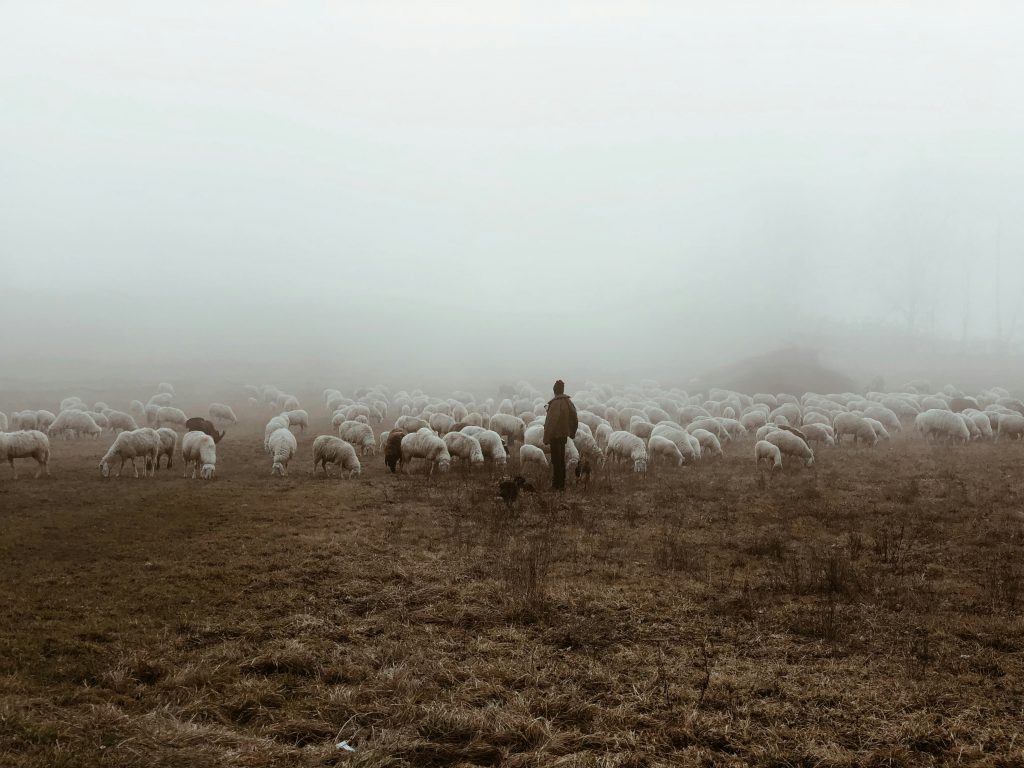
HAWL (Homoeopathy at Wellie Level) has been training UK farmers for over 22 years. More than 700 farmers and smallholders have completed their courses, which are designed to be practical rather than theoretical. The organisation is run by veterinary surgeons and homeopaths, and its focus is on giving farmers tools they can use immediately, alongside and not instead of conventional veterinary care.
The farmers who come to HAWL are not ideologues. Many start sceptical. What brings them is usually a specific frustration: antibiotic treatments that keep recurring for the same condition, withdrawal periods that take milk or meat out of the supply chain, vet bills that keep climbing, or organic certification requirements that restrict conventional medicine use.
Graham Mackay was a herdsman looking after 150 Friesian cows on an organic dairy farm in England. He had never heard of homeopathy for animals before his employers introduced it. He was sceptical. He took the HAWL course anyway.
Over twelve months, Mackay treated 49 cases of mastitis using homeopathic remedies. He did not use antibiotics on a single lactating cow in that period. No intrusive injections. No milk withdrawal. His somatic cell counts, the standard measure of udder health in dairy, stayed within acceptable levels.
One case stands out in his records. A cow with clots in her milk was treated with a combination of Sulphur, Silica and Carbo Vegetabilis. The following morning she tested clear on the California Mastitis Test. A week later, her somatic cell count at monthly recording was 16, a figure most dairy farmers would be delighted with from a cow that had never had mastitis at all.
Mackay’s experience is not unique. Naomi Oakley, farming on Dartmoor, reported a 64% reduction in antibiotic use after completing the HAWL programme. She replaced routine antibiotic injections for difficult lambings with Caulophyllum and treated foot rot with Hepar Sulphuris instead of antibiotics. Family members who had been dismissive started using the remedies themselves after watching collapsed lambs respond to Carbo Vegetabilis.
These are individual stories. They are not clinical trials. But they are consistent, and there are hundreds of them across two decades of HAWL graduates.
The research catching up
For a long time, the evidence for homeopathy in livestock sat in an uncomfortable place. Plenty of farmer testimony. Some published case reports. A handful of trials with mixed results. Not enough to satisfy veterinary bodies or policymakers, but too much to simply dismiss.
That is starting to change.
A 2016 review of peer-reviewed livestock trials from 1981 to 2014 examined 52 controlled studies involving cattle, pigs, and poultry. Of those, 28 reported outcomes favourable to homeopathy. The results were not uniform, and the review’s authors noted that better-designed trials tended to produce less emphatic results. But the direction was consistent enough to keep the question open.
What farmers have been asking for is properly funded, pre-registered trials with antibiotic use as the primary outcome measure, conducted on working farms under real conditions. That research infrastructure does not yet exist for veterinary homeopathy. But a model for how it could work has just been built.
In July 2026, the Homeopathy Research Institute in London, working with the University of Bristol, published the ENHANCE programme in Frontiers in Antibiotics. ENHANCE is a five-workstream research framework designed to investigate whether homeopathy reduces antibiotic use. It includes systematic reviews, core outcome sets, population studies, and pragmatic clinical trials. The programme currently focuses on human primary care, not farming. But its structure, a rigorous, multi-method approach with antibiotic reduction as the explicit outcome, is exactly what veterinary research in this area has lacked. The framework exists. It just needs pointing at the right sector.
The mastitis question
If there is one condition where the farming conversation about homeopathy and antibiotics converges most sharply, it is bovine mastitis.
Mastitis is the single largest reason dairy farmers reach for antibiotics. It accounts for a significant proportion of all antibiotic use in the UK dairy sector. The standard approach has been intramammary tubes containing antibiotics, often applied routinely at drying off whether or not the cow has an active infection.
Dry cow therapy, as this practice is known, is one of the clearest examples of metaphylaxis in UK farming. Entire herds treated as a precaution. It works, in the sense that it reduces mastitis incidence. But it also drives antibiotic consumption and contributes to resistance.
The industry is moving toward selective dry cow therapy, where only cows with elevated somatic cell counts or a history of infection receive antibiotics at drying off. This alone is expected to reduce dairy antibiotic use significantly.
Some farmers have gone further. The combination of selective dry cow therapy, improved milking hygiene, better nutrition, and homeopathic support for individual cases represents the most integrated approach currently in use on UK dairy farms. It is not widespread. But it is not rare either, and the farmers practising it tend to be vocal about their results.
What this is not
This article is not arguing that homeopathy should replace antibiotics. When an animal has a serious bacterial infection, antibiotics save lives.
What the evidence, both from research and from practice, increasingly suggests is that the volume of antibiotics historically used in UK farming was far higher than necessary. The 57% reduction proves it. Farms did not collapse when antibiotic use halved. Animal welfare did not deteriorate. In many cases, it improved, because the reduction forced better husbandry.
Homeopathy’s role in that reduction is difficult to quantify precisely, because it rarely operates in isolation. Farmers who adopt homeopathy typically also improve housing, nutrition, and management. Untangling which intervention produced which result is genuinely hard.
But that may be the wrong question. The right question might be: does an approach that combines better husbandry, closer observation, earlier intervention, and homeopathic support produce healthier animals with fewer antibiotics? The farmers doing it say yes. The antibiotic sales data says something is working. The research is beginning to ask the question properly.
The observation connection
There is a thread running through all of this that rarely gets discussed.
Farmers who adopt homeopathy become better observers. Not because homeopathy has magical properties, but because using it requires watching animals more carefully. Selecting a remedy means noticing whether an animal is restless or lethargic, whether symptoms are worse in the morning or evening, whether the discharge is thick or thin, whether the animal seeks heat or cold.
This level of observation, sustained over months and years, changes how a farmer sees their herd. Problems get noticed earlier. Interventions happen before a condition becomes acute. The farmer who used to wait for obvious illness and then reach for the antibiotic bottle starts acting days sooner, with gentler tools.
Several HAWL graduates have made exactly this point. The remedies matter. But the observation skills the remedies demand may matter just as much.
Final thoughts
UK farming has shown that dramatic antibiotic reduction is possible without sacrificing animal welfare or farm viability. The 57% drop since 2014 is an achievement the sector deserves credit for.
The next phase is harder. The easy reductions, the ones driven by eliminating routine preventative dosing, are largely done. What remains is the treatment of individual sick animals, where the decision to use or withhold antibiotics is made case by case, often under pressure, often in difficult conditions.
This is exactly the space where complementary approaches like homeopathy may have most to offer. Not as a blanket replacement, but as a first-line response for conditions that do not yet require antibiotics, buying time, supporting recovery, and reserving the drugs that matter most for the cases that truly need them.
HAWL’s next courses start this autumn: an in-person farm homeopathy course from 7 October and an online course from 11 November 2026. The organic sector, where homeopathy has the longest track record, continues to grow. And the research infrastructure, at last, is being built to answer the questions properly.
The quiet revolution on UK farms is not finished. But it is further along than most people realise. And somewhere in the mix, alongside better buildings and smarter breeding and cleaner milking parlours, the small bottles in the shepherd’s pocket are part of the story.
Our reading room’s an opportunity to have personal time browsing our shelves full of wisdom.
The Helen Campbell Homeopathy Foundation SCIO is a registered educational charity focused on sharing homeopathy’s fascinating history and wonderful wisdom. We’re here to inform, not prescribe!
Written with AI assistance and checked by our team.