A child comes off the trampoline at the wrong angle. A walker turns an ankle on loose stone, sits down hard, and insists they’re fine.
In a lot of homes, the next thing that happens is someone reaches for the Arnica. It’s the remedy Helen reaches for first in her own kit, and for many people it’s the first remedy they ever buy. “It settles the shock as much as the bruise,” she says.
A flower from the mountain meadows
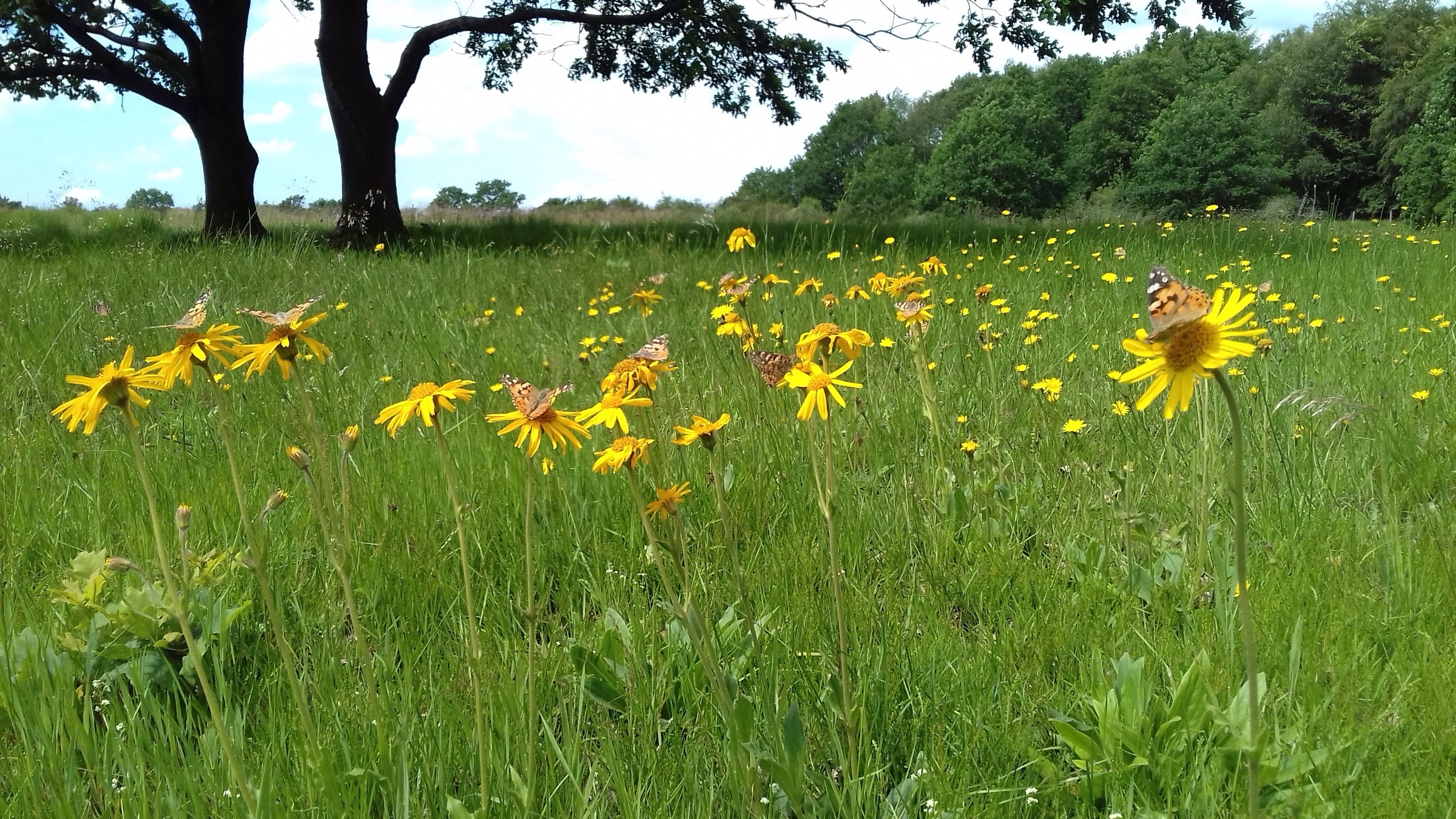
Arnica montana is a yellow, daisy-like flower of Europe’s upland grasslands. It likes poor, acid soil, the kind of meadow that has never been fertilised, and it struggles when that changes. As farming has intensified it has declined across much of its range, and wild collection is now regulated under European law.
Its long use after tumbles shows in one of its old German names, Fallkraut: the fall herb. In the late 1600s the German physician Johann Michael Fehr called it panacea lapsorum, a cure-all for falls. In English it picked up another name, leopard’s bane.
Hahnemann proved Arnica, recording the symptoms it produced in healthy people, and it was among the remedies in his first collection of provings, published in 1805. It has been part of homeopathic practice ever since.
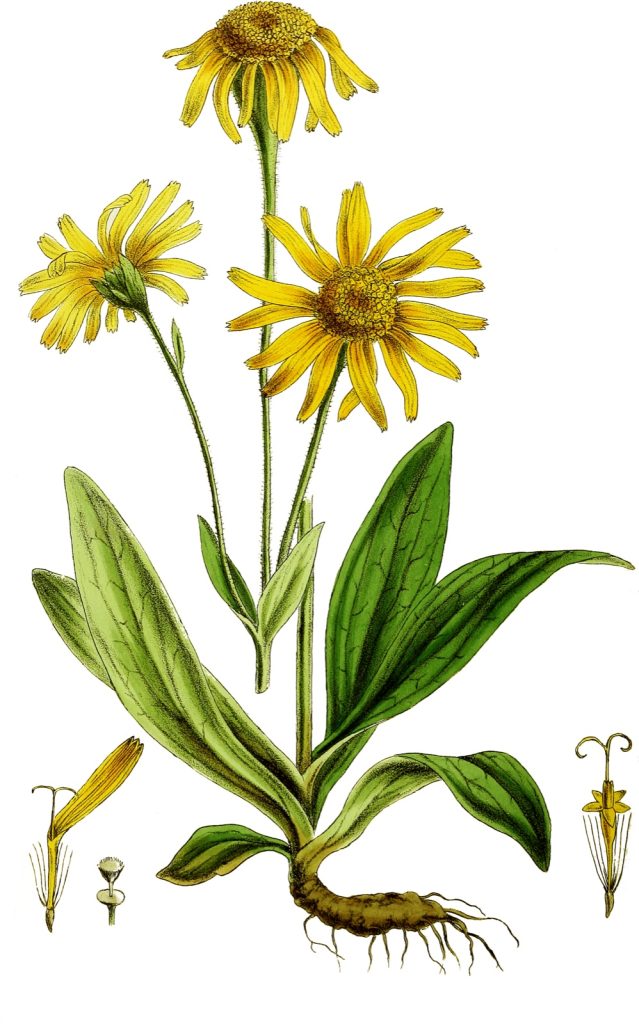
Two kinds of arnica
The arnica on the chemist’s shelf comes in two very different forms, and it’s easy to mix them up.
Many arnica creams and gels are herbal. They contain an extract of the flower and are rubbed onto the skin. In Europe, arnica flower is recognised as a traditional herbal medicine for bruises and minor injuries, for use on the skin only and never on broken skin. The plant itself is poisonous if swallowed. Others are homeopathic, and the label will say which.
Homeopathic Arnica pillules are made by repeated dilution and succussion, which is why they can be taken by mouth. They’re commonly sold at 30C.
So a tube of arnica gel and a bottle of Arnica 30C come from the same flower, but they’re prepared differently and used differently.
The Arnica picture
A bruise on its own doesn’t make someone an Arnica case. Homeopaths look at the whole person, and Arnica has a recognisable picture.
The Arnica person has taken a knock, from a fall or from a shock. Everything aches as if they’d been beaten. The bed feels too hard to lie on. They don’t want to be touched, or even approached, in case it hurts. And they’d rather be left alone, because as far as they’re concerned there’s nothing wrong with them.
William Boericke’s materia medica, still on homeopaths’ shelves more than a century after it first appeared, puts that last trait plainly: “Says there is nothing the matter with him.” Anyone who has tried to help someone up after a fall, and been waved away, will recognise it.
The same picture can follow overexertion with no fall at all. The legs after the first long hill walk of the year. The back after a weekend of digging.
Turn the tube over
Next time you pick up arnica in a pharmacy, or find an old tube at the back of the bathroom cabinet, read the label. Herbal or homeopathic? Cream or pillules? It takes a few seconds, and it’s one of the simplest ways to see where herbal medicine ends and homeopathy begins.
Arnica is for life’s knocks. For the times a child is beside themselves and nothing is right, there’s Chamomilla. You can read about it in Chamomilla: The Must-Have Remedy for Every Family.
Our reading room’s an opportunity to have personal time browsing our shelves full of wisdom.
The Helen Campbell Homeopathy Foundation SCIO is a registered educational charity focused on sharing homeopathy’s fascinating history and wonderful wisdom. We’re here to inform, not prescribe!
Written with AI assistance and checked by our team.