You know the wind that finds the gap between your scarf and your collar. It comes off the hill or up the street and goes straight through you. Then you step into the lee of a wall, or under the trees, and it’s a different day.
That difference, between the wind and the shelter, is the clue to one of homeopathy’s quieter remedies. It’s made from a flower many of us have walked among in spring: the woodland bluebell.
A carpet in the oakwood
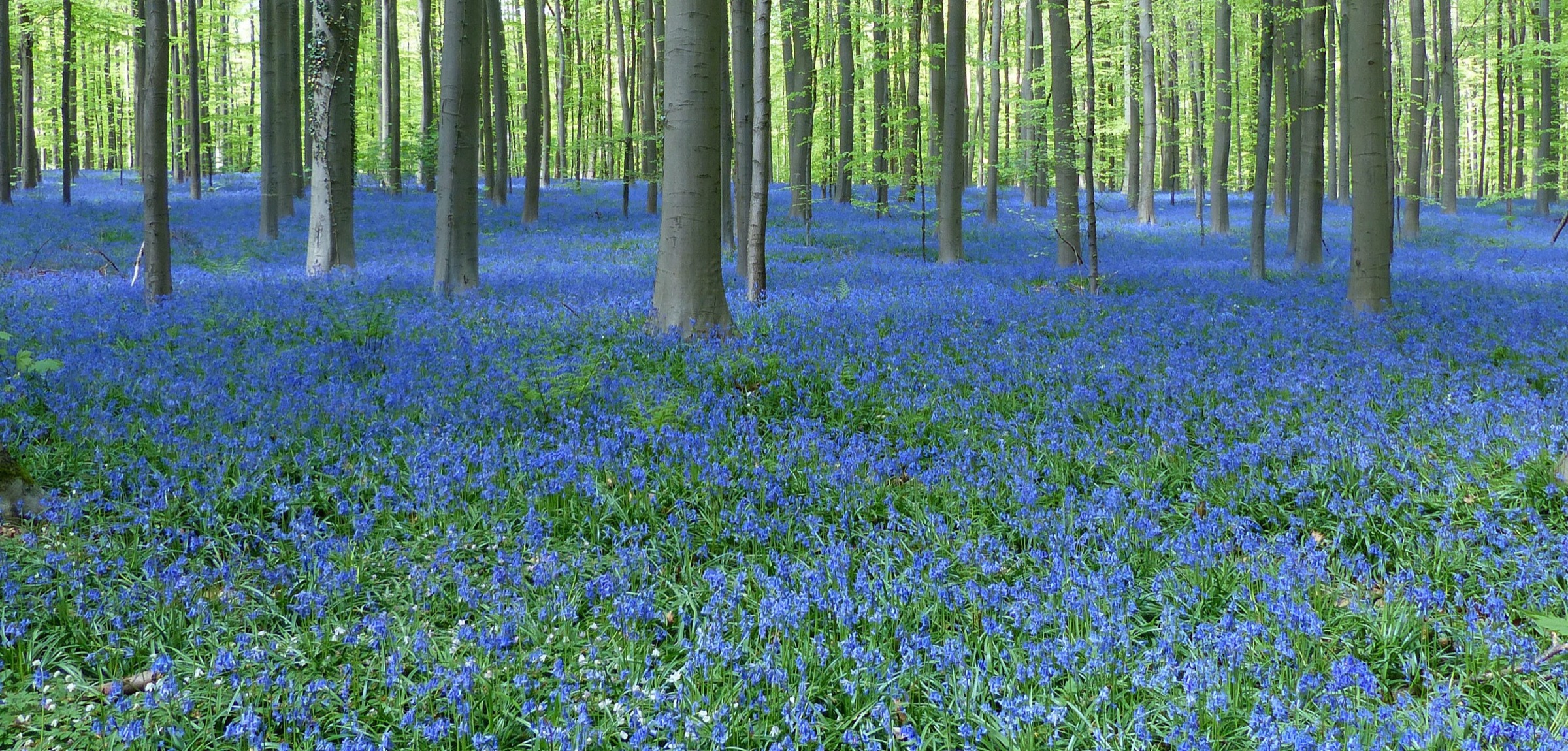
Every May, the floor of Kinclaven Bluebell Wood in Perthshire turns blue. The wood sits in a bend of the River Tay near Murthly, with about 50 hectares of ancient oak. Nearby are the remains of Kinclaven Castle, which William Wallace burned during a siege in 1297.
Woods like this are a British speciality. Somewhere between a quarter and a half of all the world’s bluebells grow in Britain and Ireland. They do best in old, undisturbed woodland, so a sheet of bluebells is often a sign of an ancient wood.
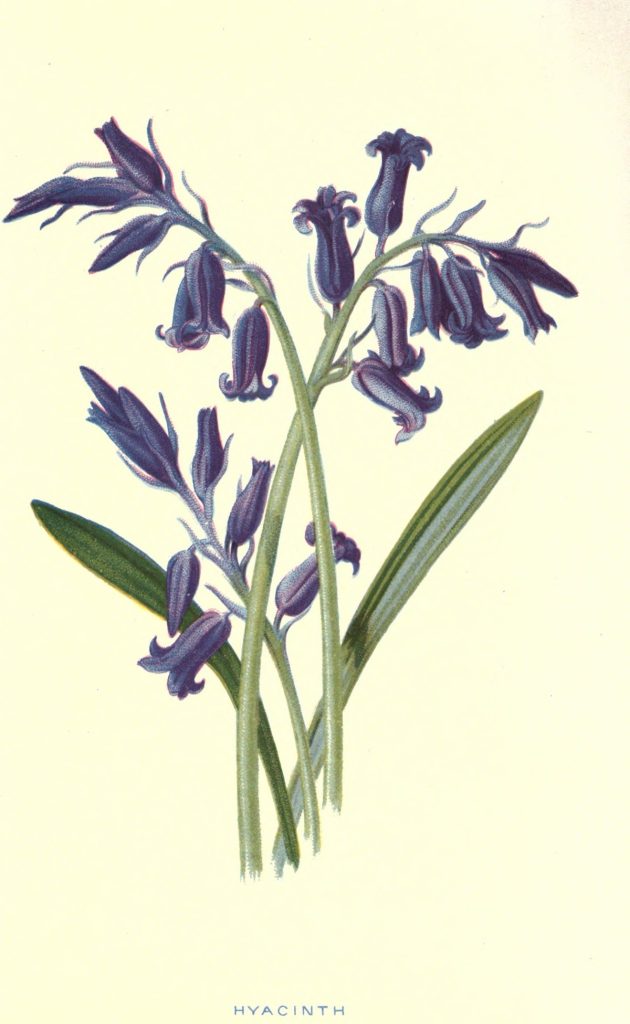
In Scotland, the name can confuse. Here “bluebell” has long meant a different flower, the harebell of summer hillsides, the Bluebell of Scotland. The woodland flower is Hyacinthoides non-scripta, and it has had several names over the years.
The unwritten flower
Non-scripta means “unlettered”. In the Greek myth, when the youth Hyacinthus died, a flower grew from his blood, and Apollo marked its petals with “AI AI”, a cry of grief. Botanists named the bluebell for what it lacks: it’s a hyacinth with no writing on it. Homeopathy uses an older name, Agraphis nutans, and it means much the same: the unwritten, nodding flower.
The bulb has had its practical uses too. Elizabethans crushed it for a starch to stiffen their ruffs, and its sticky sap was used as glue in bookbinding and to fix feathers to arrows. Like many plants that end up in the materia medica, it isn’t one to eat: the sap is poisonous.
A doctor who tried common plants
The bluebell came into homeopathy through Robert Thomas Cooper (1844 to 1903), an Irish-born doctor who spent over seventeen years as physician for diseases of the ear at the London Homoeopathic Hospital, the hospital Frederic Quin had founded. Cooper was drawn to the plants around him. He wrote of giving “single doses of our common plants, often with no proving whatever to guide me.”
So Agraphis was never put through a full proving. What we know of it comes from Cooper’s practice and from his friend John Henry Clarke, who dined with him once a month for years to compare notes and wrote much of it into his Dictionary of Practical Materia Medica.
The bluebell picture
William Boericke’s materia medica describes the Agraphis person as having “a proneness to take cold on exposure to cold winds.” The nose blocks. The throat and ears join in, and the cold settles into the mucous membranes, with “Chill from cold winds.”
Clarke adds the detail that gives the remedy its character. “The plant grows in sheltered places,” he writes, and Cooper gave being better from shelter as a leading sign.
Picture someone who’s perfectly well indoors. They go out into a raw easterly, and by teatime the nose is stuffed up high near the bridge and they can’t get warm. Back inside, out of the wind, they start to come back to themselves. It isn’t the cold that gets them so much as the wind.
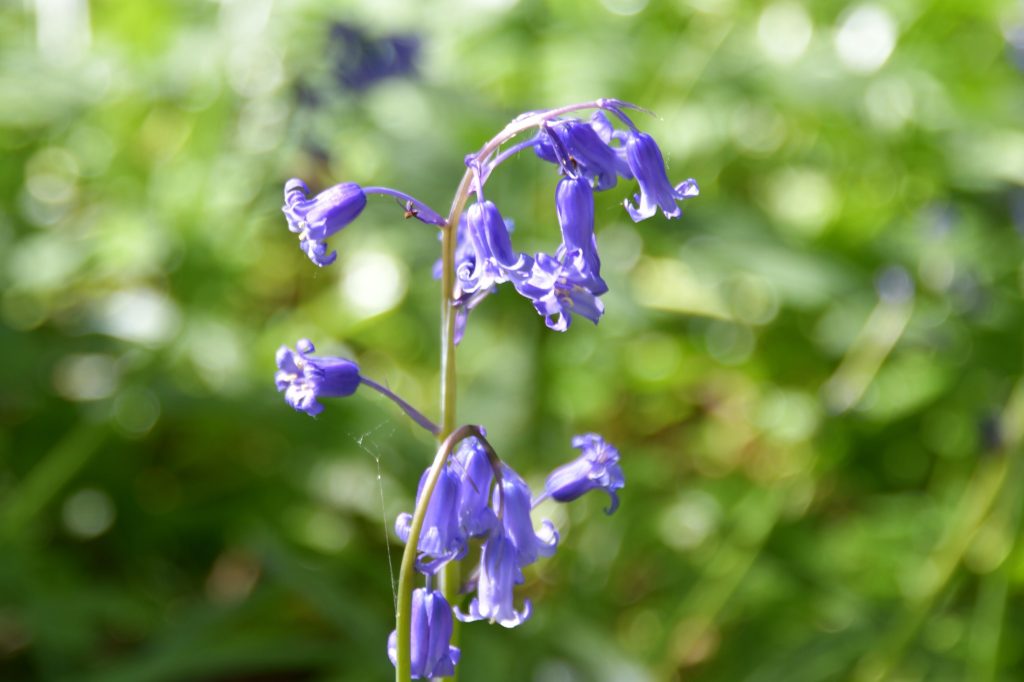
Where’s your bluebell wood?
This winter, when a cold wind gets to you, notice which part of it you feel. Is it the cold, the damp, or the wind itself? And does shelter alone make a difference, before you’ve even warmed up? That kind of noticing is where a remedy picture starts.
Then, come May, find a bluebell wood. Walk the paths, leave the flowers where they grow, and see how the light changes under the leaves. Our Scots pine article has more on Scotland’s native plants in the materia medica.
Image credits: Luc.T and Sleet4190 on Wikimedia Commons; botanical plate by F. Edward Hulme (public domain).
The Helen Campbell Homeopathy Foundation SCIO is a registered educational charity focused on sharing homeopathy’s fascinating history and wonderful wisdom. We’re here to inform, not prescribe!
Written with AI assistance and checked by our team.