Most of us have done it at some point. Someone offers to show us something, and we won’t look, not because of what it is but because of who is showing it to us.
In Calcutta in the 1860s, one of the city’s most promising young doctors did exactly that. The man he kept turning away had no medical degree at all. He was a merchant, a member of one of the richest families in the city, and he had spent his own money and much of his life treating the poor without charge. His name was Rajendra Lal Dutta, and he is often called the father of Indian homeopathy.
A household of two hundred
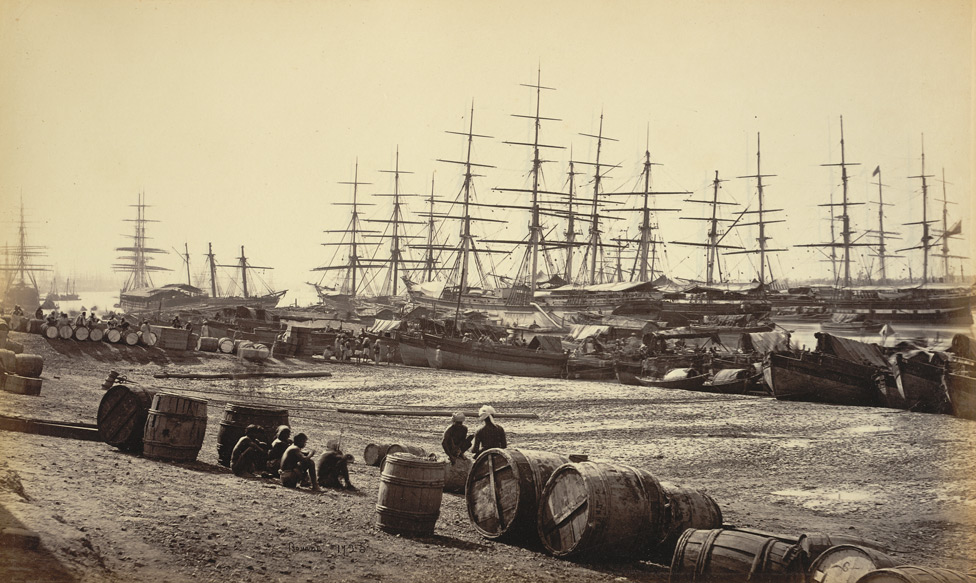
Dutta was born in 1818 into the Dutta family of Bowbazar in Calcutta, today’s Kolkata. In the words of the historian Shivnath Shastri, he had “all the advantages that wealth and education could give.” He studied at the Hindu College, where the young radical teacher Henry Derozio shaped a whole generation of Bengali thinkers, and he worked as an agent, or banian, for merchant firms trading with America.
In 1849 a young Bostonian named Charles Eliot Norton arrived in Calcutta on business. He would later become Harvard’s first professor of fine art. He was soon a guest at the Dutta house, and his letters home describe a remarkable family: about two hundred people, from white-haired elders to babies in arms, living together with their property shared for seven generations. He called Rajendra “one of the most agreeable and intelligent” men he had met in the city. The two became, in Norton’s words, “warm friends,” and wrote to each other for years.
From one kind of medicine to another
Dutta’s interest in medicine began long before homeopathy. Shastri records that he attended Calcutta’s Medical College as an outside student, “with the object of being able in future to render medical help gratis to the poor and needy.” With a qualified doctor, Durgacharan Banerji, he opened a free dispensary in his own house, using the conventional medicine of the day.
Then, around 1851, a French homeopath, Dr Tonnerre, arrived in Calcutta. Dutta helped him found a homeopathic hospital and free dispensary in the city. It didn’t last. But the impression it left on Dutta did, and he gave the rest of his life to homeopathy.
That’s worth putting beside the story of Frederic Quin. Quin’s homeopathic hospital opened in London in 1850. Within about a year, a similar experiment was beginning on the other side of the world.
The doctor who wouldn’t look
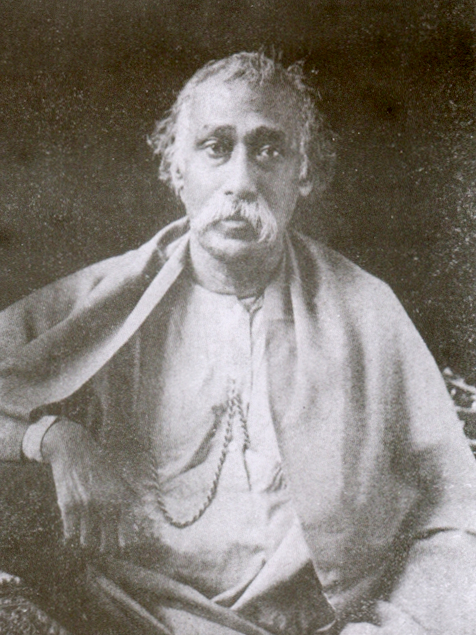
Mahendralal Sircar came from a very different world. Dutta was born rich and had no medical degree. Sircar was born in 1833 into a farming family in a village outside Calcutta, and worked his way through the Medical College with the highest honours. He gained his MD in 1863.
That same year he became secretary of the new Bengal branch of the British Medical Association. At its opening meeting, he gave a speech attacking homeopathy.
Dutta read the speech. In the words of Sircar’s biographer, Sarat Chandra Ghose, he “thought he found out the right man”: a doctor who, once won over, could carry homeopathy across India.
It wasn’t easy. By then Dutta’s own medical friends had decided that he “had lost his head,” in Sircar’s later words. And Sircar himself wanted nothing to do with homeopathy. Looking back, he admitted he had been “refusing even to watch his cases on the plea that I could not afford to lose time and professional dignity to watch cases under a layman.”
What changed things was a book. A friend who disliked homeopathy asked Sircar to review William Morgan’s Philosophy of Homoeopathy for a periodical. Sircar expected to demolish it. Instead he found he couldn’t fairly review a system that appealed to facts without looking at any. So, at last, he went to watch Dutta’s patients.
In February 1867, at the annual meeting of the same medical association, Sircar told his colleagues he now believed in homeopathy. His biographer notes that any doctor who took that step at the time could expect “a severe ostracism.” Sircar took it anyway, and a year later launched the Calcutta Journal of Medicine to make his case in print.
The hut and the mansion
Dutta wasn’t only a campaigner. In the later part of his life he went out with the French homeopath Thiennette Berigny, visiting the sick.
Shastri, writing in 1903, says he made “no distinction of creed, caste, or rank.” A household sweeper got as much of his attention as a high-caste Brahmin, and he went as readily into a poor family’s hut as into a mansion.
His visits weren’t brief. He would sit and talk with the people he treated, and if he found a family without money for proper food, Shastri says, he “would place his own purse at their disposal.”
It wasn’t only the poor he reached. Dutta also won over leading figures in Calcutta, among them the reformer Ishwar Chandra Vidyasagar, one of the great names of nineteenth-century Bengal. Ghose describes people gathering at Vidyasagar’s home to discuss homeopathy, and it spread the way ideas often do, from one trusted person to the next.
Dutta died in June 1889, at about 71.
What grew from it
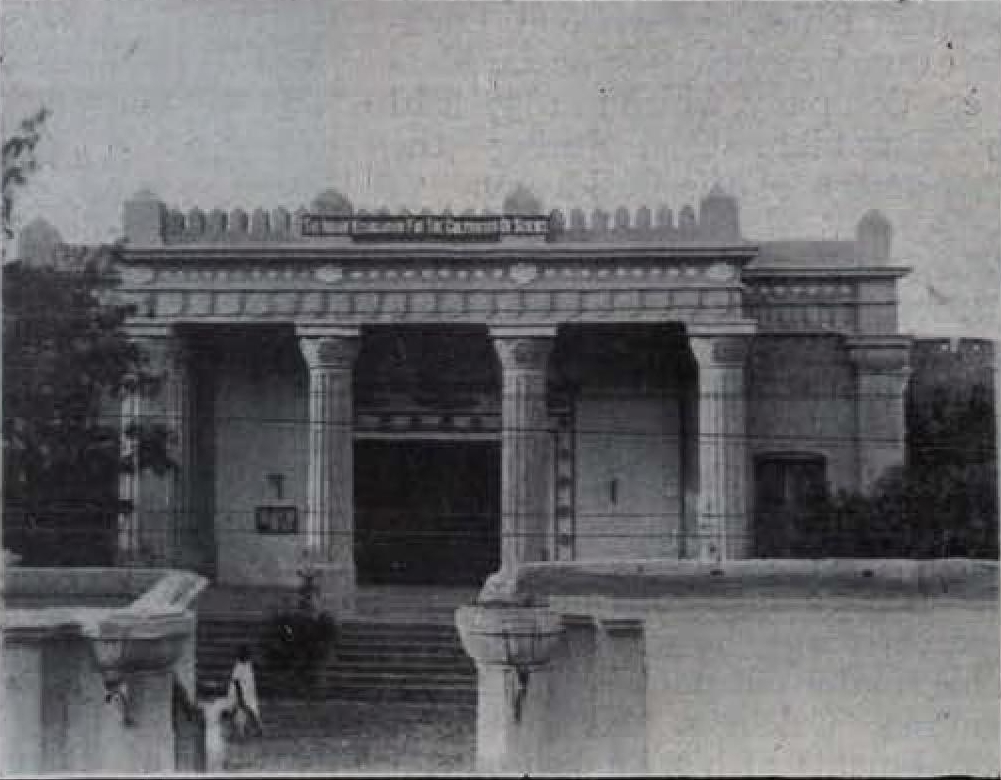
Sircar went on to found the Indian Association for the Cultivation of Science in 1876, so that Indians could carry out scientific research of their own. It was there, in 1928, that the physicist C. V. Raman discovered that when light bounces off molecules, a small part of it changes colour. The Raman effect, as it’s now called, won him the Nobel Prize in Physics in 1930, and scientists still use it to work out what materials are made of. The doctor Dutta spent years trying to persuade was a scientist to his core, which may be exactly why he insisted on seeing for himself.
Homeopathy in India grew far beyond one merchant’s rounds. The country now has more than 345,000 registered homeopathic practitioners, with a national commission of their own. Part of that story began in Calcutta, with a merchant who wouldn’t stop asking a sceptic to come and look.
Reading him for yourself
The best accounts of Dutta are more than a century old, and free to read online. Shivnath Shastri’s history of the Bengal renaissance, in Roper Lethbridge’s 1907 translation as Ramtanu Lahiri, Brahman and Reformer, has a short life of Dutta near the end. Sarat Chandra Ghose’s Life of Dr. Mahendra Lal Sircar (1909) tells the conversion story, partly in Sircar’s own words.
And next time you find yourself refusing to look at something because of who’s showing it to you, it might be worth going to take a look.
Part of our series on the pioneers of homeopathy. Read the introduction: The Pioneers Who Shaped Homeopathy
Image credits: photographs by Samuel Bourne (1860s) and Upendrakishore Roy Choudhury, and a 1908 photograph of the Indian Association for the Cultivation of Science, all public domain via Wikimedia Commons.
The Helen Campbell Homeopathy Foundation SCIO is a registered educational charity focused on sharing homeopathy’s fascinating history and wonderful wisdom. We’re here to inform, not prescribe!
Written with AI assistance and checked by our team.