Introduction
Rebels, Visionaries, and the Occasional Aristocrat
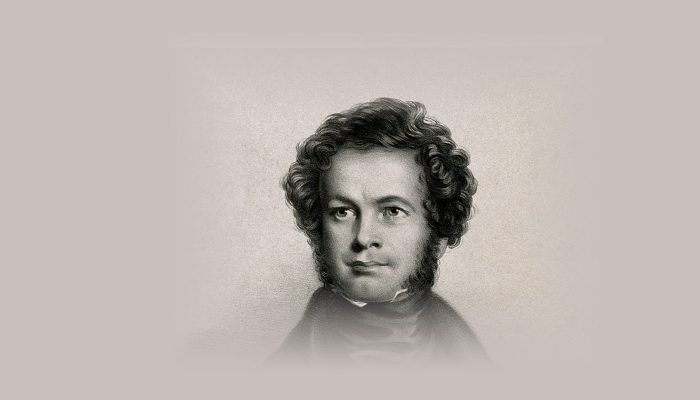
Samuel Hahnemann lit the spark. But it took a remarkable cast of characters, across continents and centuries, to fan homeopathy into a system that today serves hundreds of millions of people. Some were doctors who risked their careers. Others were aristocrats, lawyers, and landlords who had no business practising medicine at all. A few were outright eccentrics. All of them changed homeopathy forever.
The Man Who Proved It at Gunpoint
When Samuel Hahnemann first published his ideas, the medical establishment was not merely sceptical, it was hostile. Homeopathy needed someone brave or reckless enough to carry the flame into new territory. It found that person in Constantine Hering.
Hering was a young German medical student tasked by his professor with writing a paper to disprove Hahnemann’s theories once and for all. The assignment backfired spectacularly. The more Hering investigated, the more convinced he became that Hahnemann was right. He abandoned the debunking, became a convert, and promptly made himself unwelcome in German academic circles.
He emigrated to America, where he would earn the title ‘Father of American Homeopathy‘, establishing the first homeopathic medical college in the United States and formulating ‘Hering’s Law of Cure‘, a set of observations about the direction of healing that practitioners still reference daily. But how exactly a sceptic-turned-believer ended up reshaping American medicine is a story with more twists than the assignment that started it all. But that’s a story for another day.
Society Doctor Who Charmed a Nation
If Hering took homeopathy to America through sheer force of conviction, Frederic Hervey Foster Quin took it to England through something rather more British: social connections.
Quin was no ordinary physician. He moved in the highest circles of London society, counted duchesses and a future king among his patients, and possessed the kind of charm that opened doors which would have remained firmly shut to a less socially gifted man. He also had a direct line to the founder: in 1831 he consulted Hahnemann himself before travelling to a cholera outbreak in Moravia.
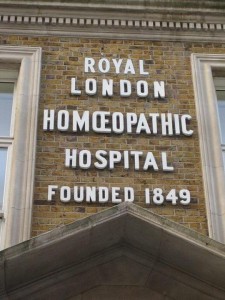
In 1849, Quin founded the London Homeopathic Hospital, now the Royal London Hospital for Integrated Medicine, giving homeopathy an institutional foothold in a country where it would put down deep roots. Royal support for the hospital outlasted him: in 1895 the Duchess of Teck opened its new building on Great Ormond Street.
But how a fashionable society doctor came to catch cholera in Moravia, and why his hospital’s figures went missing in 1854, are less well known. There is more to the society doctor than the society.
Read the full story: ‘Frederic Quin: The Man Who Brought Homeopathy to England’
The Russian Aristocrat and His Single Flask
While Hering was building institutions and Quin was charming the aristocracy, a Russian landowner named Semyon Korsakov was doing something altogether more peculiar: treating peasants on his estate with homeopathic remedies he prepared using a single glass flask and a method that most orthodox homeopaths considered questionable at best.
Korsakov was not a doctor. He was a government official and landowner who became fascinated by homeopathy and began preparing remedies by emptying a flask of its liquid, refilling it with water, and succussing, reasoning that enough of the original substance would adhere to the glass walls to impart its properties to the new water. This method, now known as ‘the Korsakovian dilution‘, was dismissed by many of Hahnemann’s followers during Korsakov’s lifetime.
Two centuries later, the Korsakovian method is one of the two standard approaches to preparing high-potency remedies used across the world. The aristocratic amateur turned out to be right about something the professionals had rejected.
The Lawyer Who Built the Toolkit
Not all of homeopathy’s pioneers held a stethoscope. Clemens von Boenninghausen was a lawyer, a botanist, and, following a serious illness from which he recovered through homeopathic treatment, one of the most methodical minds ever to turn itself to the problem of remedy selection.
Boenninghausen became a close confidant of Hahnemann himself, one of only a handful of non-physicians whom Hahnemann trusted with the nuances of his system. Using his legal training and his botanist’s instinct for classification, Boenninghausen developed the ‘Therapeutic Pocket Book’, a repertory that allowed practitioners to match symptoms to remedies with a precision that had previously relied on memory and intuition.
His approach was controversial. Orthodox homeopaths accused him of reducing the art to a mechanical exercise. Boenninghausen’s supporters argued he had given practitioners their most powerful tool. That argument, remarkably, has never been fully settled, and it still divides practitioners today. The tension between intuition and system in homeopathic prescribing can be traced directly to a nineteenth-century lawyer who thought the whole thing could be better organised.
The Man Whose Book Never Went Out of Print
If you visit any homeopathic clinic in the world, in Mumbai, in London, in São Paulo, in Athens, there is one book almost certain to be within arm’s reach. It is James Tyler Kent’s ‘Repertory of the Homeopathic Materia Medica‘, first published in 1897, and it has been in continuous use for over a hundred and twenty-five years.
Kent was an American physician who did something no one before him had managed: he organised the vast and sprawling world of homeopathic knowledge into a single, usable reference. His Repertory is essentially a reverse dictionary, you look up the symptom and it tells you which remedies are known to produce it. Before Kent, practitioners had to hold enormous volumes of information in their heads. After Kent, they had a system.
But Kent was far more than a compiler. He was a passionate advocate of high-potency prescribing, using remedies diluted far beyond the point where any molecule of the original substance could remain. This made him a hero to one wing of homeopathy and a heretic to another. He attracted fanatical devotion and fierce opposition in almost equal measure. His influence on modern homeopathic practice is so pervasive that it is almost impossible to disentangle where Hahnemann ends and Kent begins, which is precisely what his critics have always complained about.
Kent’s story is really the story of how homeopathy became what it is today.
The Indian Landlord Who Changed Everything
While homeopathy was being debated in the lecture halls of Europe and America, it was quietly finding its largest audience on the other side of the world. Babu Rajendra Lal Dutta was a wealthy Indian landlord who encountered homeopathy in the mid-nineteenth century and recognised something that the Western practitioners had largely overlooked: its extraordinary suitability for a country where millions of people had no access to conventional medicine.
Dutta used his own fortune to establish a homeopathic hospital and free dispensary in Calcutta, making remedies available to people who could never have afforded a doctor. He earned the title ‘Father of Indian Homeopathy‘, and the movement he catalysed is staggering in scale. Today, India has over 200,000 registered homeopathic practitioners and an estimated 200 million people who use homeopathy as their primary form of healthcare. It is the largest homeopathic market in the world by a very wide margin.
How a landlord’s philanthropy in colonial Calcutta became a healthcare system serving a fifth of humanity is one of the most remarkable and least-told stories in the history of medicine, conventional or otherwise.
The Greek Who Brought It Back from the Dead
By the mid-twentieth century, homeopathy was in steep decline across much of the Western world. Pharmaceuticals were ascendant, antibiotics had transformed medicine, and homeopathy looked to many like a relic. The number of practitioners was dwindling. Training institutions were closing. It seemed entirely possible that the system Hahnemann had built would simply fade away.
It did not, in large part because of a Greek engineer-turned-homeopath named George Vithoulkas.
Vithoulkas did not come from a medical background. He came to homeopathy through his own health crisis, studied it with an intensity that bordered on obsession, and eventually became the most prominent advocate for its revival in the second half of the twentieth century. In 1996 he was awarded the ‘Right Livelihood Award‘, often called the ‘Alternative Nobel Prize’, for his work in restoring homeopathy as a living, evolving clinical discipline rather than a historical curiosity.
His methods were controversial. His personality was forceful. His insistence on what he called “classical” homeopathy, one remedy at a time, carefully selected, deeply individualised, put him at odds with practitioners who had drifted toward more pragmatic, multi-remedy approaches. But the revival happened. And Vithoulkas, more than any other single figure, is the reason it did.
What drove an engineer with no medical training to dedicate his life to a system most of the modern world had written off?
Final Thoughts
Each of these figures shaped homeopathy in ways that are still felt in every consultation, every prescription, and every debate within the field. Some built institutions. Some built tools. Some built bridges between cultures. A few simply refused to let the whole thing die.
Their lives, their contributions, their controversies, and the legacies they left behind have continued to shape homeopathy across the globe. Because the history of homeopathy is not a single story. It is a series of remarkable individuals who, for reasons ranging from intellectual conviction to personal crisis to sheer stubbornness, decided that this particular idea was worth fighting for.
Our reading room’s an opportunity to have personal time browsing our shelves full of wisdom.
The Helen Campbell Homeopathy Foundation SCIO is a registered educational charity focused on sharing homeopathy’s fascinating history and wonderful wisdom. We’re here to inform, not prescribe!
Written with AI assistance and checked by our team.