
Introduction
Few things are more frustrating for gardeners than discovering their lovingly nurtured plants under siege from insects. Aphids clustering on roses, caterpillars munching their way through brassicas, or spider mites quietly draining the life from houseplants, these scenarios are all too familiar. Traditionally, chemical pesticides have been the go-to solution, but many gardeners are uneasy about their impact on the environment, wildlife, and even their own health. This is where homeopathy steps in as an unexpectedly elegant and gentle alternative.
Seeing Plants Through a Homeopathic Lens
Plants, much like humans and animals, have a vital force that animates and protects them. When this vitality is strong, plants stand tall, lush, and resilient, with a natural ability to resist pests and disease. But when that force is weakened, perhaps through poor soil, irregular watering, or environmental stress, plants lose their edge. Insects, ever opportunistic, move in.
Rather than viewing insects solely as adversaries to be destroyed, homeopathy encourages us to see them as messengers. Their presence hints at an underlying imbalance. Homeopathy’s role is to support the plant’s inner strength, helping it to restore balance so it can thrive without the need for forceful interventions.
Why Gardeners Are Turning to Homeopathy
So why would someone reach for a remedy bottle instead of a pesticide spray? The reasons are compelling:
- Non-toxic and safe – Homeopathic remedies pose no risk to bees, butterflies, pets, or children.
- Residue-free – Remedies are so highly diluted that they leave no trace on fruit, herbs, or vegetables.
- Restorative, not suppressive – Remedies aim to strengthen plants from the inside out, rather than offering short-term fixes.
- Sustainable – A small supply of remedies can last for years, ready to use whenever a problem arises.
The approach resonates with those who already garden organically or according to permaculture principles: it is about working with nature rather than against it.
Matching Remedies to Insect Problems
The beauty of homeopathy lies in its precision. Just as in human prescribing, the choice of remedy depends on observation. Each insect problem has its unique signature, and the gardener acts a little like a detective, matching symptoms to remedies.
1. Aphids
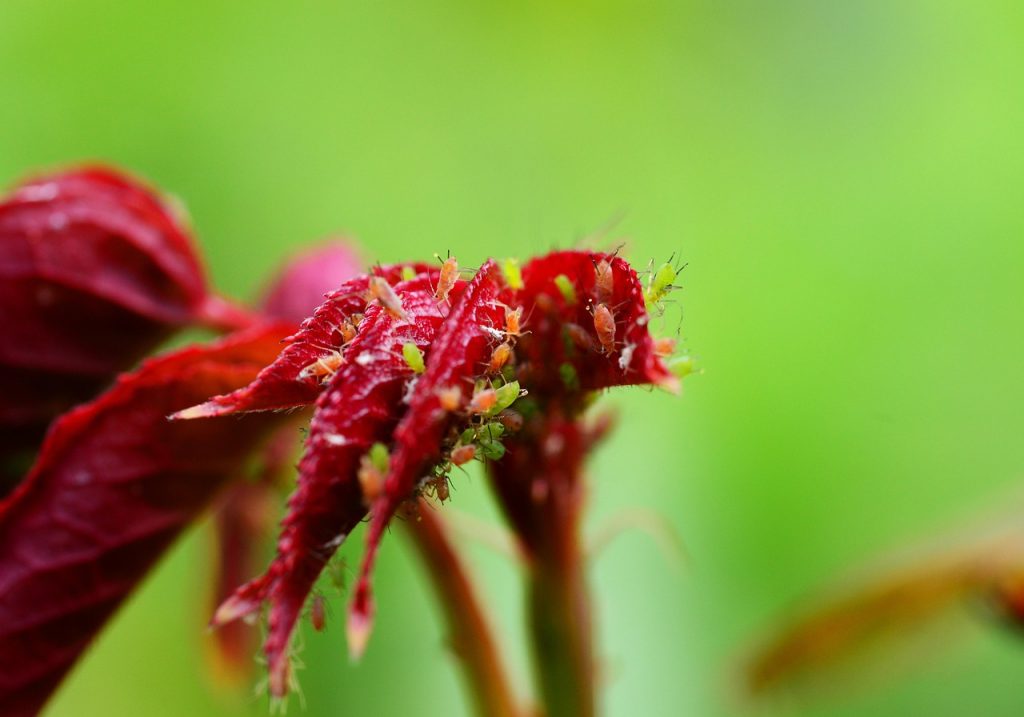
These tiny sap-suckers are notorious for stunting new growth and spreading disease. A remedy made from the ladybird, Coccinella septempunctata, is often considered, as the ladybird is aphids’ natural predator. Cina is another option, especially where aphid activity leaves plants sticky with honeydew and their leaves curled or distorted.
2. Caterpillars
The sight of chewed, lace-like leaves is a familiar frustration. Bacillinum can be a powerful ally when caterpillars appear en masse and seem to take over overnight. Thuja may also be called for when weakened sap flow makes a plant particularly vulnerable.
3. Spider Mites
These almost invisible pests thrive in dry, hot conditions, often betraying themselves by tiny webs and yellow-speckled leaves. They are a common pest found on houseplants, greenhouse crops, and outdoor ornamental plants, particularly in warm and dry conditions. Sulphur is a trusted choice here, especially when mites proliferate under heat and dryness. If the plant appears “overheated” and agitated, Belladonna might be more fitting.
4. Slugs and Snails
Though not insects, slugs and snails deserve mention. Their nocturnal raids can devastate seedlings. Helix tosta, made from toasted snail shell, has a long tradition of use in such cases, acting almost like a protective shield for tender young plants.
How to Use Remedies Effectively
Most gardeners find 6C or 30C potencies effective for plant use. Remedies can be applied in several ways:
- Watering – Dissolve a few drops in water and apply directly to the roots.
- Spraying – Mist diluted remedies over the leaves, ensuring both sides are covered.
- Soil application – Target the soil when the issue feels systemic rather than surface-level.
In acute infestations, daily application for a short period may be needed. For ongoing or seasonal issues, a weekly or monthly dose is often enough to maintain resilience.
The Subtle Art of Observation
Perhaps the most rewarding aspect of using homeopathy on plants is watching their response. Leaves regain gloss and colour, new shoots appear strong and upright, and pests often recede of their own accord. Instead of battling symptoms, gardeners find themselves nurturing health at a deeper level.
For many, this process transforms the relationship with their garden. It’s no longer a battlefield of sprays and countermeasures, but a conversation with living beings.
A Glimpse Into Real Gardens
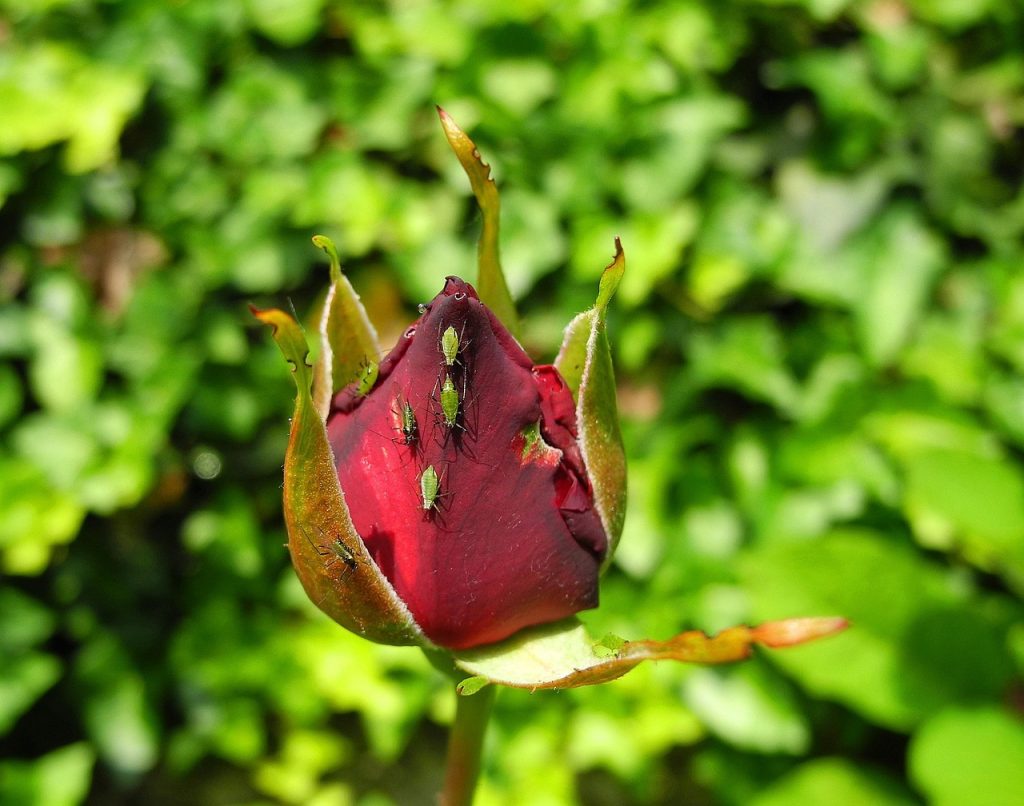
- Roses with Aphids – A gardener plagued every spring by aphids on her roses turned to Coccinella septempunctata 30C. Within two weeks of spraying, not only did the aphids decline sharply, but ladybirds began arriving in droves. The roses responded with fresh, vigorous growth—a vivid reminder of nature’s ability to restore balance when gently supported.
- Tomatoes with Spider Mites– In a greenhouse, tomato plants suffered from spider mites, their leaves speckled yellow with fine webs stretching between stems. After two weeks of Sulphur 6C, applied twice weekly, the plants rallied. Ventilation was improved at the same time, and together these measures brought the crop back to health.
Homeopathy in the Bigger Picture
It is worth emphasising that remedies work best when combined with good gardening practices. Healthy soil, crop diversity, and thoughtful watering remain essential. Homeopathy is not a replacement for ecological stewardship but a complement to it. The remedies act like fine-tuning instruments, supporting what is already present in the gardener’s careful attention.
This perspective echoes a broader truth: pests are not merely invaders but signals. By learning to respond with sensitivity rather than aggression, gardeners create spaces that are not only productive but deeply harmonious.
Responding to Critics
It would be naïve to ignore the critics who dismiss homeopathy as “nothing more than water.” Yet many gardeners, season after season, observe tangible changes in their plants’ health and resilience. Plants, after all, are not influenced by belief or expectation.
Their recovery is visible, measurable, and persuasive.
Scepticism is natural, but curiosity is fruitful. Those who try remedies for themselves often find their gardens become their own teachers.
Final Thoughts
Insects will always have their role in the grand web of life, but their impact need not spell disaster for our cherished plants. By applying homeopathy, gardeners can move beyond chemical quick-fixes and instead nurture true resilience. Remedies such as Coccinella, Sulphur, and Helix tosta offer safe, sustainable answers to some of the most common insect challenges.
For those who already appreciate homeopathy in human health, extending it to the garden is not only logical but deeply satisfying. It reframes pest management as a partnership: the gardener supporting the plant, the plant regaining its balance, and nature finding her equilibrium once more. In this way, homeopathy becomes less about “fighting pests” and more about fostering a thriving, living garden.
The Helen Campbell Homeopathy Foundation SCIO is a registered educational charity focused on sharing homeopathy’s fascinating history and wonderful wisdom. We’re here to inform, not prescribe!