
Introduction
Vets across the UK are warning that Christmas brings a sharp rise in life‑threatening poisonings from chocolate and other festive foods for dogs and cats, and that many of these emergencies are entirely preventable. For homeopathic pet owners, this is a time to combine rigorous, conventional first aid with thoughtful use of remedies to help navigate shock, stress and recovery.
Why Christmas Is So Risky
The weeks around Christmas see a marked increase in pets needing emergency treatment after eating toxic foods, especially chocolate and raisins hidden in sweets, cakes and leftovers. UK surveys show that the vast majority of companion‑animal vets see at least one case of chocolate poisoning over the festive period, alongside frequent cases involving raisins, sultanas and products sweetened with xylitol.
Several factors make the season especially dangerous:
- Abundance of rich foods, snacks and desserts left on coffee tables, under trees or on low countertops.
- Distraction of busy households, parties and visitors, which means less supervision for inquisitive pets.
- Decorations and packaging such as gift‑wrapped chocolates or edible ornaments, which dogs in particular can sniff out and tear open.
For health conscious owners, recognising this pattern is the first step in creating a calmer, genuinely pet‑safe Christmas.
The Main Festive Food Dangers
Several common Christmas foods can be lethal to pets, even in surprisingly small quantities. Understanding why they are so dangerous helps reinforce why there can be no “just a little taste” approach.
- Chocolate (theobromine and caffeine)
- Chocolate contains theobromine and caffeine, stimulants that dogs and cats cannot metabolise effectively, making them highly toxic.
- Dark and baking chocolate carry far higher theobromine levels than milk chocolate, so even a small amount can be fatal for smaller dogs.
- Symptoms can appear within roughly six to twelve hours and may include vomiting, diarrhoea, restlessness, rapid breathing, seizures and, in severe cases, collapse and death.
- Raisins, grapes, currants and festive bakes
- Grapes and their dried forms (raisins, currants, sultanas) can cause acute kidney failure in dogs, with no reliably “safe” dose identified.
- Mince pies, Christmas pudding, panettone and fruit cakes often contain large quantities of these fruits, turning even a single stolen slice into an emergency.
- Xylitol (in “sugar‑free” and “healthy” treats)
- Xylitol, a common sugar substitute in chewing gum, some peanut butters and low‑sugar sweets, triggers a rapid insulin release in dogs, leading to sudden hypoglycaemia and possible liver failure.
- Even tiny amounts can be life‑threatening, and signs such as weakness, wobbliness, collapse or seizures may develop very quickly.
- Cooked bones, fat, alcohol and decorations
- Cooked poultry and meat bones can splinter, causing choking, gut perforation or severe internal damage.
- Fatty leftovers and rich gravies can trigger painful pancreatitis, while alcohol in desserts or drinks is far more potent in pets than humans.
- Tinsel, ribbons and glittered ornaments can cause intestinal blockages or irritation if chewed and swallowed, particularly in playful cats and puppies.
In all these cases, veterinary experts emphasise that prevention is the only truly safe strategy.
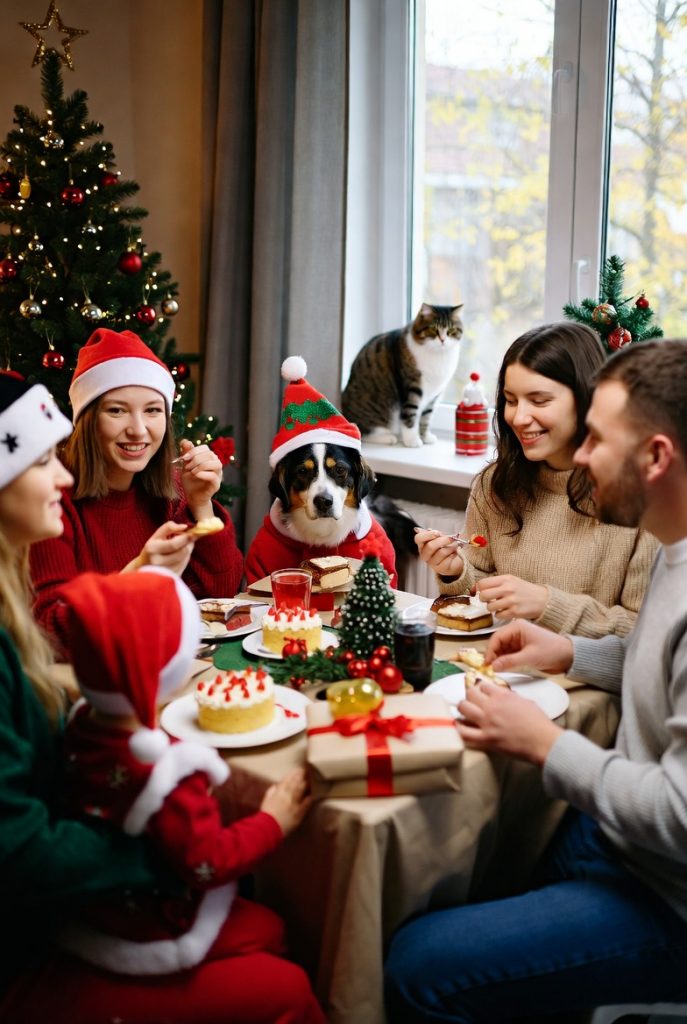
Prevention: Creating a Truly Pet‑Safe Christmas
From a holistic perspective, prevention is a blend of practical housekeeping and an attitude of conscious guardianship. Rather than seeing Christmas foods as something to “share” with pets, it helps to view them as medicines would be viewed around a child: strictly out of reach.
Simple but powerful steps include:
- Control access to food
- Keep all chocolate, desserts and nibbles off low tables and away from sofa arms; use closed tins or high cupboards rather than open plates.
- Hang advent calendars and edible decorations high, well out of reach of both dogs and agile cats.
- Audit the environment
- Check gift bags, stockings and wrapped presents for food items, especially chocolate boxes, “dog‑safe” treats that may actually contain xylitol, and homemade bakes with dried fruit.
- Keep bin lids secure and ensure compost or food recycling caddies are inaccessible.
- Educate guests and family
- Brief visitors, especially children, that pets must not be given festive snacks, however pleading the eyes.
- Offer safe alternatives, such as species‑appropriate treats or chew toys, so people can still feel involved in “treating” the animal.
Creating clear household rules around food is one of the most loving gifts a guardian can offer their animal this season.
What To Do If Your Pet Eats Something Toxic
Suspected poisoning is always an emergency that needs for prompt veterinary assessment when a pet has ingested chocolate, raisins, xylitol or similar hazards.
Key steps are:
- Contact a vet immediately
- If you think your dog or cat has eaten chocolate, raisins, grapes, xylitol or cooked bones, call your vet or an emergency clinic at once, even if they look normal.
- Symptoms can be delayed by several hours, and early intervention (for instance, induced vomiting or activated charcoal) can be life‑saving.
- Gather accurate information
- Note what was eaten, how much, when, and the animal’s weight and existing health issues; vets use this information to calculate the level of risk.
- Do not attempt home‑induced vomiting unless specifically instructed by a veterinary professional.
- Follow veterinary instructions fully
- Hospital treatment may involve intravenous fluids, monitoring, medication to control seizures or arrhythmias, or intensive care in serious cases.
- Even if the outcome is good, kidney or liver function may need follow‑up, especially after raisin or xylitol exposure.

Where Homeopathy Can Be A Welcome Support
Homeopathy is not a substitute for urgent veterinary treatment in poisoning, but many experienced guardians and integrative practitioners use remedies to support their pet’s wider response. This may include easing shock, calming agitation, and supporting recovery once the immediate crisis is over.
Some commonly considered aspects include:
- Shock, fear and trauma
- Aconite is traditionally regarded as a first‑aid remedy for acute fright and shock, used by many homeopathic practitioners at the onset of sudden emergencies.
- It is often given while travelling to the vet, not instead of going, to help stabilise the emotional and energetic reaction.
- Digestive upset and overindulgence
- Nux vomica is widely used in homeopathic pet kits for symptoms related to over‑indulgence, such as vomiting, abdominal discomfort, irritability or apparent “hangover” states after dietary upsets.
- Some guardians find it a useful adjunct once a vet has stabilised the animal, especially if the picture matches the classic Nux vomica pattern of sensitivity and intolerance.
- Wounds, procedures and convalescence
- Arnica is frequently employed in veterinary homeopathy to support animals after trauma, surgery or intensive handling, aiming to reduce bruising, soreness and the energetic imprint of shock.
- Other remedies may be chosen by a qualified homeopathic vet according to the pet’s individual constitution and response post‑crisis.
A well‑stocked homeopathic pet first‑aid kit, combined with clear protocols about when to seek conventional help, can allow guardians to feel more resourced and less panicked when the unexpected happens. The deeper art lies in discerning when a situation is suitable for at‑home support and when it clearly crosses into emergency territory that belongs in the veterinary clinic.
Final thoughts
For homeopathic pet owners, Christmas invites a particular blend of love and responsibility: keeping toxic foods firmly off the menu, staying alert to subtle signs of trouble, and drawing on remedies in a way that works alongside any needed veterinary care. This balanced approach helps to honour both the animal’s physical safety and its subtler, energetic wellbeing throughout the festive season.
Our reading room’s an opportunity to have personal time browsing our shelves full of wisdom.
The Helen Campbell Homeopathy Foundation SCIO is a registered educational charity focused on sharing homeopathy’s fascinating history and wonderful wisdom. We’re here to inform, not prescribe!