Introduction
July in the British countryside and things are starting to come through. Hedgerows thick with elderflower turning to berries, wheat not yet ready for the combine, and in gardens and market gardens across the country, the first real harvests of the year. New potatoes out of warm soil, garlic drying in open sheds, broad beans filling baskets.
The big autumn harvest is still ahead. But the year’s work is starting to show.
What’s less visible is a strand of farming practice that’s been part of this for longer than most people realise. Alongside crop rotation, composting, soil management and generations of accumulated knowledge, some farmers have quietly included homeopathy in how they grow. It’s never been mainstream. It’s never sought the spotlight. But it’s endured, particularly among organic, biodynamic and mixed farms across the UK.
And as conversations around regenerative agriculture and soil health keep growing, interest in agricultural homeopathy is coming back.
How the knowledge actually spread
Agricultural homeopathy isn’t new. By the late 1800s, European growers were already using homeopathic preparations for livestock and crops. The ideas made their way to Britain and took hold among farmers who preferred observation over rigid formulas.
But here’s the thing that connects it to something bigger. This knowledge didn’t spread through marketing or institutional programmes. It spread through people. Kitchen tables, village halls, field walks, conversations between growers. One farmer showing another what worked. Agricultural societies passing on practical experience.
That’s community knowledge in its purest form. The same way any valuable practice survives in a community: because someone trusted someone enough to share what they knew, and it stuck.
Why potatoes keep coming up
If one crop sits at the centre of agricultural homeopathy discussions, it’s the potato.
That makes sense. Potatoes ask more of the soil than almost anything else you can grow. They develop underground, shaped by soil structure, drainage, moisture and the web of life around their roots. You can’t see what’s happening until you lift them.
Britain’s connection to potatoes runs deep. From Norfolk’s sandy soils to the Fens, from Herefordshire to the Scottish Borders. Scotland in particular has become internationally respected for seed potatoes, thanks to cooler temperatures and lower virus pressure.
Some growers who use homeopathy have traditionally treated seed potatoes before planting, seeing it as starting with the healthiest possible foundation. Whether that’s a few rows on an allotment or hundreds of acres commercially, every successful crop starts beneath the surface.
What July actually produces
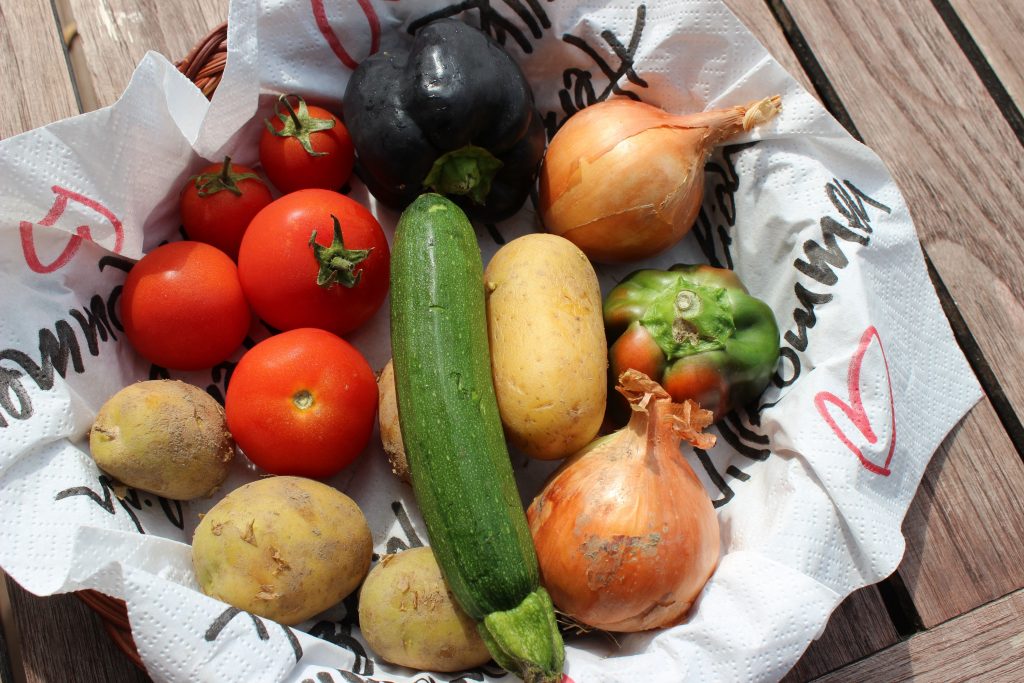
We think of harvest as an autumn thing, but July is one of Britain’s richest months:
New potatoes, garlic, shallots, broad beans, peas, courgettes, beetroot, early carrots, salad leaves, gooseberries, redcurrants, blackcurrants, cherries, thyme, sage, mint.
Meanwhile onions are swelling, apples forming, and the main potato crop is building toward late summer. Walk through a farm shop right now and the season writes itself across every stall.
The bit that’s invisible
Modern farming talks a lot about soil biology now. But experienced growers have always known that healthy crops start underground.
A teaspoon of healthy soil contains billions of microorganisms. Fungi, bacteria, invertebrates forming one of nature’s most complex systems. Mycorrhizal fungi create partnerships with plant roots, helping crops access water and nutrients while extending their reach through the soil. Scientists describe these fungal networks as a communication system between plants.
That’s an extraordinary discovery. But it echoes what generations of farmers already understood: the field is a living whole, not just a place to put crops.
This way of thinking naturally attracted people to agricultural homeopathy. The focus was never just the crop. It was soil vitality, biodiversity, the wider farm environment. The connections between things, not just the things themselves.
The most valuable part of any system, whether it’s a farm or a community, is usually the connections. And they’re usually the hardest to see.
Observation as a skill
The thread running through all of this is observation.
Experienced growers notice things most people miss. The colour of potato foliage after rain. The smell of healthy soil. Earthworm numbers after cultivation. Swallows arriving overhead.
Before digital sensors and satellite imagery, farmers relied on watching. Daily, patient, close to the ground.
Those drawn to agricultural homeopathy placed particular value on this. Walking fields rather than managing them from a screen. Seeing what’s actually happening rather than relying on what should be happening according to a plan.
That patient attentiveness feels surprisingly relevant now.
The harvest traditions we’ve lost
Britain’s farming history is full of customs that have almost disappeared.
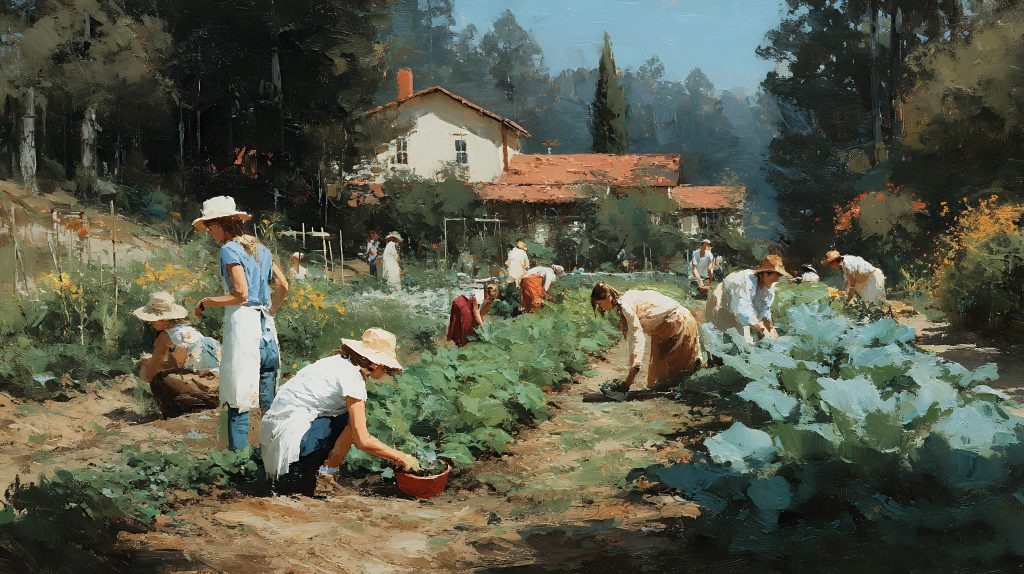
In parts of Yorkshire and Scotland, the first potatoes lifted were considered lucky. Some families kept one aside as a token for the season ahead. Harvest suppers celebrated the earliest crops long before the cereal harvest began. Fresh potatoes, peas, broad beans and soft fruit on the table, marking the first real taste of summer.
Even now, there’s something about eating potatoes dug minutes before they reach the kitchen. The flavour reminds you how closely food connects to the season it’s grown in.
These weren’t just traditions. They were how farming communities marked time, shared abundance, and stayed connected to each other and to the land. When those traditions fade, something less visible goes with them.
Final Thoughts
Agricultural homeopathy isn’t a story of dramatic breakthroughs. It belongs to an older tradition. Patience, observation, learning from the land.
On a July morning, lifting new potatoes from warm earth while garlic dries under timber beams, these ideas feel at home. British farming has always balanced innovation with tradition, science with experience, productivity with stewardship.
But perhaps most striking is how the knowledge survived. Not through institutions or funding programmes. Through people. Farmers talking to farmers. Communities sharing what worked. Trust built over seasons, not contracts.
The healthiest harvests start with healthy soil. But they also start with the relationships between the people who tend it.
Our reading room’s an opportunity to have personal time browsing our shelves full of wisdom.
The Helen Campbell Homeopathy Foundation SCIO is a registered educational charity focused on sharing homeopathy’s fascinating history and wonderful wisdom. We’re here to inform, not prescribe!