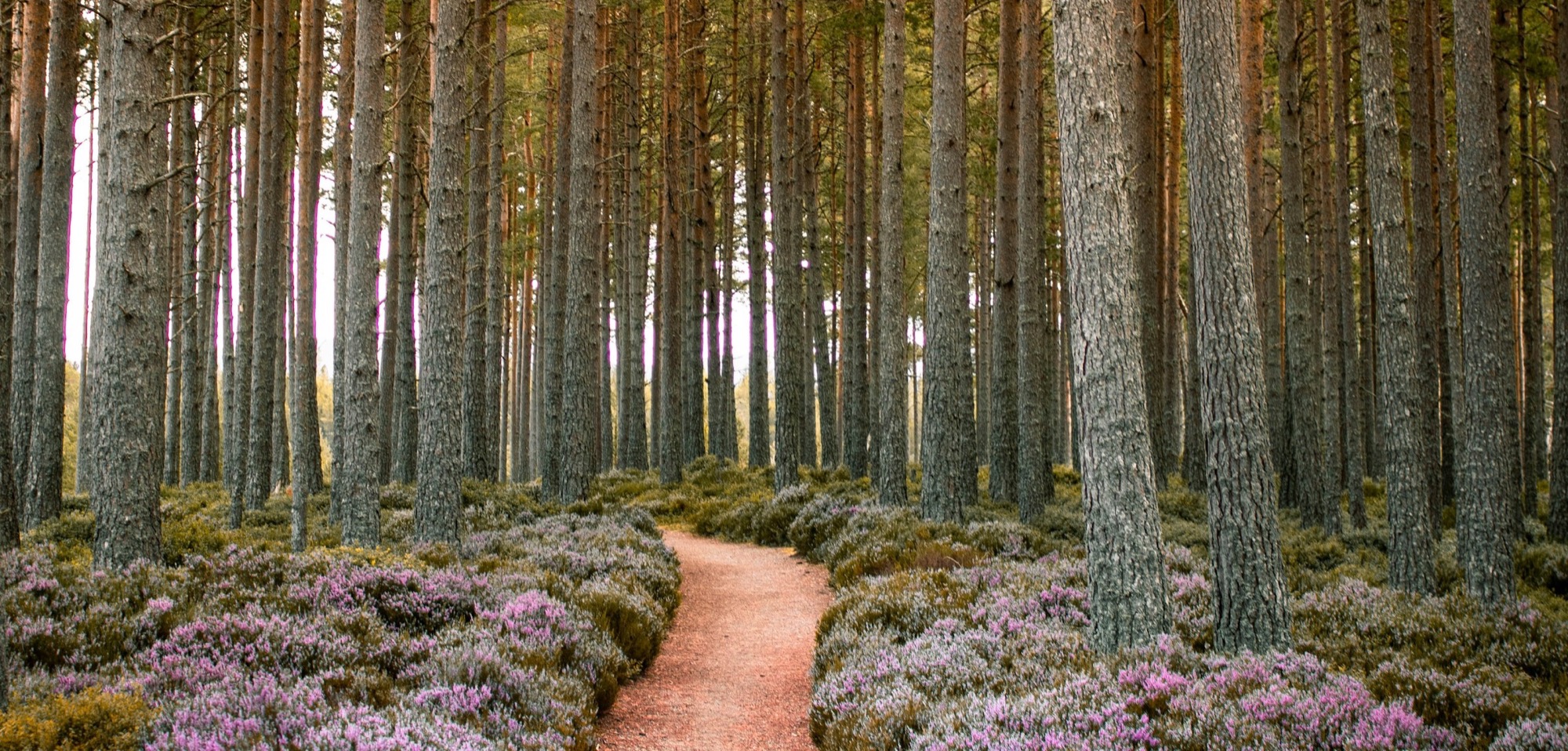
You step out of the wind into a pinewood and the world goes quiet. The air smells of resin. The ground is soft with needles, the light comes down in long slants between red-barked trunks, and something in your shoulders lets go. Most people who have walked in the Highlands know that feeling, and the tree behind it is the Scots pine.
When Scotland set out to choose a national tree, more than 4,500 people took part in a three-month public consultation. The Scots pine won with just over half the vote, well ahead of the rowan and the holly, and in January 2014 the Scottish Parliament made it official.
Three native conifers
Britain has only three native conifers: the Scots pine, the yew and the juniper. They arrived as the ice retreated, before rising seas cut Britain off from the continent. The spruces of the big plantations and most of the trees we bring indoors at Christmas came much later.
Each of the three has its own place in Scottish life. The pine is the tree of the old Caledonian Forest, which today survives as about 18,000 hectares of native pinewood in 84 separate woods, according to the Caledonian Pinewood Inventory. The yew is the tree of churchyards and long memory. The juniper is the low, prickly shrub of the hill, and the source of gin’s flavour.
All three are in the homeopath’s materia medica too.
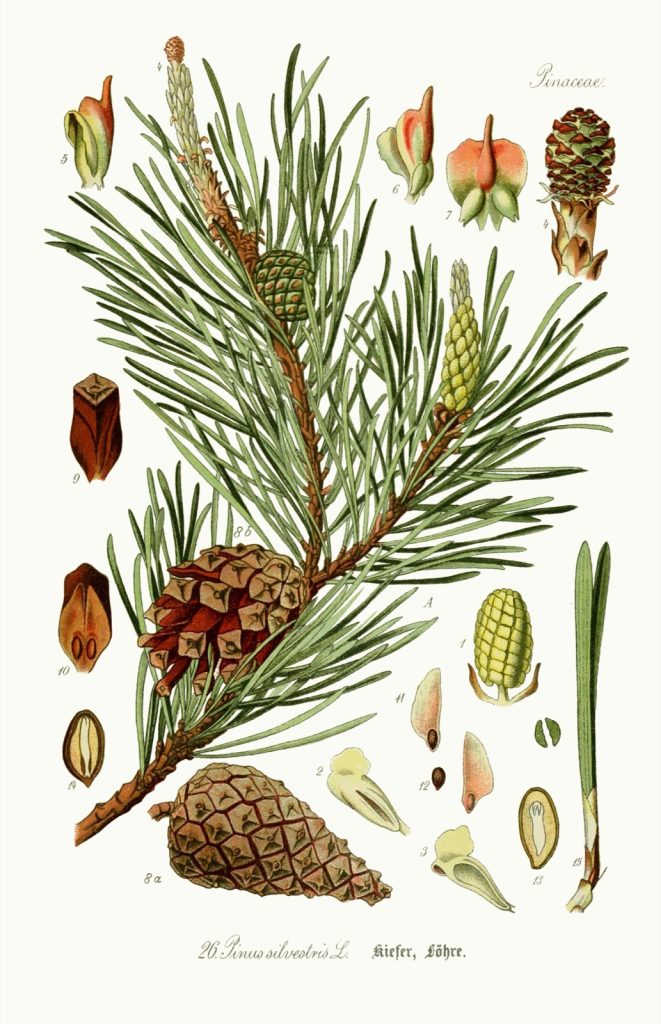
Scots pine
William Boericke’s Materia Medica, first published in America in 1901 and still on many homeopaths’ shelves, lists the remedy Pinus sylvestris under the name “Scotch Pine”. It’s a small remedy, with a short entry, but the picture is distinctive.
Boericke describes children who are slow to find their feet, with weak ankles and a lateness in walking. In adults, the picture is stiffness that settles in the joints, particularly the fingers, and an itch that gathers around the joints and on the abdomen. He adds an image that stays with you: the chest “seems thin and to give way.”
The same tree turns up in a different tradition. Edward Bach worked at the London Homoeopathic Hospital, the hospital Frederic Quin had founded, before turning to plants to develop his flower remedies in the 1930s. One of his 38 is Pine, made from Pinus sylvestris. Bach’s description of the Pine state begins “For those who blame themselves.” It’s for the person who is never content with their own efforts, and who takes on responsibility even for other people’s mistakes. Flower remedies are prepared differently from homeopathic ones, and Bach saw them as a separate system, but it’s striking that the same tree drew attention from both.
Yew
In a churchyard at Fortingall in Perthshire stands a yew that may be the oldest living tree in Britain. Estimates of its age run from 2,000 years to well over 3,000, and some put it nearer 5,000. Nobody can count its rings, because the heart of the tree rotted away long ago. What’s left is a ring of living wood that has kept growing around the space where its centre used to be.
Almost every part of a yew is poisonous, which is a reminder of why homeopathy prepares its remedies the way it does. Like Gelsemium, Taxus baccata comes from a plant you’d never want to eat.
Boericke’s yew picture is short. Among its features he notes a feeling of emptiness and pins and needles at the pit of the stomach, so that the person “must eat frequently.” Then, in brackets, he adds a note to the reader: “compare the coniferæ.”
Juniper
Juniper has a particular place in Scotland’s New Year. In the old Hogmanay custom of saining, recorded by the folklorist F. Marian McNeill, the household was blessed with water on New Year’s morning. Then the doors and windows were shut tight, and branches of burning juniper were carried through every room until everyone was sneezing and coughing. Only then were the windows thrown open to let the cold, clean air of the new year in.
In homeopathy, Boericke’s juniper entry is brief. It concerns the kidneys, and older people whose digestion has become sluggish.
What the conifers share
Boericke’s note, “compare the coniferæ”, is an invitation to read the family side by side. Do that, and a pattern appears. Again and again, the conifer remedies are pictured through the stomach. Each one shows it in its own way.
Black spruce (Abies nigra). The lump. Pain that always arrives after eating, with a sensation Boericke describes as if a hard-boiled egg had lodged at the top of the stomach. Everything feels knotted. No appetite in the morning, then real hunger by noon and night.
Hemlock spruce (Abies canadensis). The appetite that outruns the stomach. A gnawing, faint, hungry feeling, a craving for coarse food like pickles, radishes and turnips, and a tendency to eat far more than can be digested. Chilly, with a sensation like cold water between the shoulder blades.
Yew (Taxus baccata). The hollow. Emptiness and pins and needles at the pit of the stomach, and a need to eat often.
Scots pine (Pinus sylvestris). The odd one out. Its picture lives more in the joints and skin than the stomach, a reminder that a family resemblance is never the whole story.
Three conifers with a stomach in common, and each still distinct: the knot, the hunger, the hollow. That’s individualisation in miniature. A homeopath doesn’t stop at ‘it’s a conifer’. The detail that matters is what this particular person feels, and when.
The best-known conifer remedy of all, Thuja, comes from the North American arbor vitae, the “tree of life”. It has a much larger picture of its own, and deserves an article to itself.
Many hands in the pinewood
In places, the Caledonian Forest is coming back. Where deer numbers have come down, as in Glen Affric, Glenfeshie and Mar Lodge, young pines are growing again. Elsewhere it’s on a knife-edge: a four-year survey by Trees for Life found most of the 84 surviving pinewoods under serious pressure, mainly from deer eating the young trees.
Much of the recovery is being done by hand. Trees for Life bought the Dundreggan estate in Glenmoriston in 2008 to restore native forest there. Much of the work is done by volunteers, hundreds of them each year. They grow seedlings from local seed, plant them out on the hill and protect them from deer. In 2012 the charity planted its millionth tree, with the help of the wildlife filmmaker Gordon Buchanan, and by around 2020 its volunteers had planted nearly two million native trees at 44 sites across the Highlands.
A forest restored like that depends on knowledge passed from person to person: which seed to collect, where a young pine will take, how to read a hillside. It’s the same way the materia medica has always grown, one careful observation added to another.
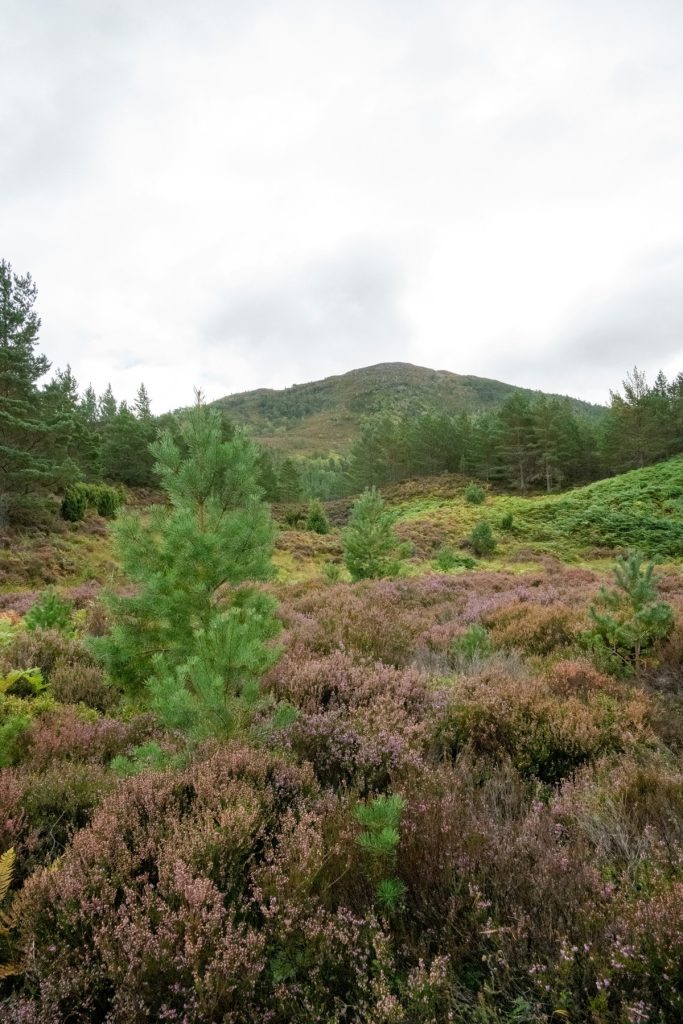
Next time you’re among the pines
You don’t need to know any remedies to notice what these trees have to offer.
- Find all three. The Scots pine is easy to spot by the orange-red bark high on its trunk. Look for yews in old churchyards and juniper on open moorland.
- Notice what the wood does to you. The smell of resin, the quiet, the change in your breathing. Paying attention to sensations is where every remedy picture starts.
- Read the family side by side. If you have a materia medica at home, look up the conifers together and see how differently one family can show itself.
Image credits: Jack Skinner and Nadine Marfurt on Unsplash; botanical plate by Otto Wilhelm Thomé (public domain).
The Helen Campbell Homeopathy Foundation SCIO is a registered educational charity focused on sharing homeopathy’s fascinating history and wonderful wisdom. We’re here to inform, not prescribe!
Written with AI assistance and checked by our team.