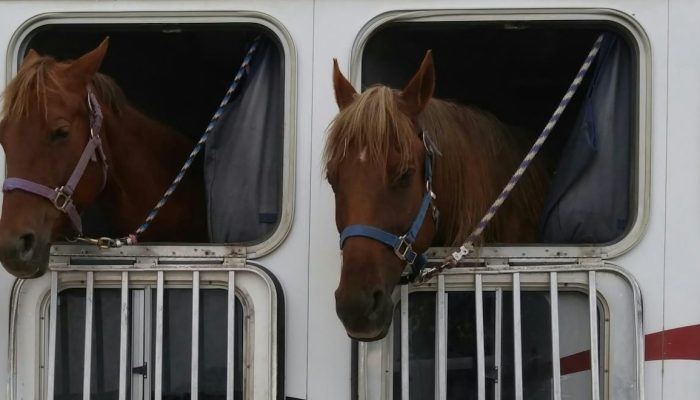
The ramp goes down. One horse walks straight up as if it’s heading home. The one beside it plants its feet, breaks into a sweat and won’t take another step. Same lorry, same yard, same morning.
Anyone who has kept horses knows both of them. There are around 726,000 horses in Britain and some three million people who ride, according to the 2023 National Equestrian Survey, and most of those people could describe their own horse’s quirks in detail: the one who frets when a field companion leaves, the one who’s stiff on a cold morning and loosens up after ten minutes, the one who’s brave on a hack until something rustles in a hedge.
That attention to the individual horse is where homeopathy starts.
Seeing the whole horse
A homeopath looks less at the name of a problem and more at the pattern around it. Two horses can be nervous travellers in completely different ways. One goes quiet, trembles and seems to shut down. The other can’t stand still, paws, calls and gets more wound up by the minute. In homeopathic thinking, those are two different pictures, and each points towards a different remedy.
The details that matter are the ones owners notice anyway. When does it happen? Is the horse worse in the heat or the cold, in company or alone, first thing in the morning or after work? What eases it? A horse can’t describe how it feels, so the observations of the person who knows it best become the case.
A tradition that began with owners
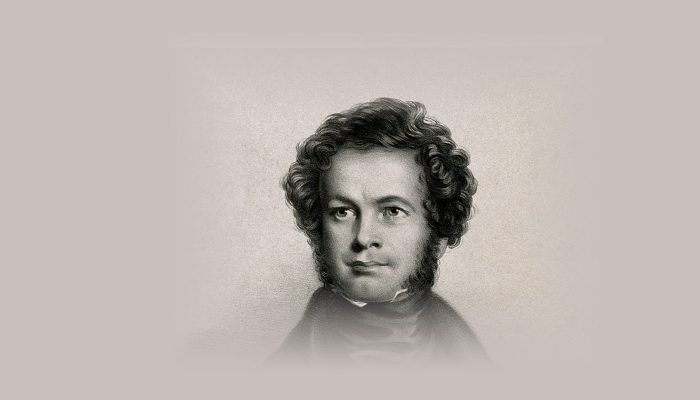
Using homeopathy on animals is almost as old as homeopathy itself, a tradition we explored more widely in Homeopathic Principles for Animal Care. In Germany, from the 1820s, it spread largely through farmers and owners treating their own stock. One of its early champions was Wilhelm Lux, appointed Professor of Veterinary Science at the University of Leipzig in 1806. Lux read Hahnemann’s work and began applying it to animals from about 1820. In 1833 he published Isopathik der Contagionen, which gave the world the idea of isopathy: preparing a remedy from the very agent behind a disease. Isopathy is still discussed today, from veterinary practice to hay fever.
In Britain the tradition has grown along two paths. Vets who wanted to learn homeopathy formed the British Association of Homeopathic Veterinary Surgeons in 1982, and the Faculty of Homeopathy went on to train and examine vets in the subject. Alongside them, Homeopathy at Wellie Level has been teaching farmers and smallholders the responsible use of homeopathy on their own animals since 2001, starting with when to use it and when to call the vet.
Few people did more for veterinary homeopathy in Britain than Christopher Day. He qualified from Cambridge in 1972, helped found the BAHVS and served it as secretary and president, and in 1987 opened the Alternative Veterinary Medicine Centre in Oxfordshire, where horses and ponies made up much of his caseload. He was twice president of the International Association for Veterinary Homeopathy and Veterinary Dean of the Faculty of Homeopathy for more than thirty years. When he died in April 2023, he left a line that sums up his outlook: “I would hate to think that any veterinary colleague might be denied a similar experience and that any suffering animal might be denied the potential benefit of homeopathic healing.“
Homeopathy, horses and the law
Horses bring a responsibility that people don’t. In the UK, the Veterinary Surgeons Act 1966 means that only a vet may diagnose and treat an animal. The Act allows owners, their household and people they employ to give minor medical treatment to their own animals, but a homeopath without a veterinary qualification can’t treat someone else’s horse.
The Royal College of Veterinary Surgeons set out its position in 2017. It considers that homeopathy lacks a recognised evidence base, and asks that complementary treatments are used alongside conventional care rather than instead of it, and in discussion with the horse’s vet. The statement leaves owners free to choose homeopathy for their animals on that basis.
That’s why so much equine homeopathy in this country is practised by vets themselves. A homeopathic vet brings both kinds of knowledge to the same horse, and many owners who use remedies at the yard talk them through with their own vet.
Pictures horse owners will recognise
In homeopathy, each remedy has a “picture”: the pattern of behaviour, sensations and circumstances it’s traditionally associated with. These are some that come up most often around horses. They describe; they don’t promise.
Aconite. The sudden fright. A horse that’s been badly scared, by fireworks, a loose dog or a near miss on the road, and is still wide-eyed, restless and trembling afterwards. The picture is shock that arrives fast and doesn’t settle.
Gelsemium. The horse that goes quiet with dread. Before travelling or a competition it seems dull and heavy, may tremble or sweat, and would rather be left alone. It isn’t naughty. It has gone inward.
Argentum nitricum. The opposite traveller. Hurried, impulsive, wound up before anything has happened, often with loose droppings before a show. The anticipation is the problem.
Pulsatilla. The horse that can’t bear to be left. It calls and frets when its field companion goes out, settles the moment company returns, and is gentle and affectionate with people it trusts.
Ignatia. Grief. Horses form deep bonds, and some take the loss of a companion hard: off their feed, withdrawn, standing at the gate where the other horse used to be.
Arnica. The one most owners already keep in the tack room. Bumps, knocks, a fall, the bruised and sore feeling after hard work. We looked at Arnica’s long history in our recent article.
Rhus toxicodendron. The older horse on a damp autumn morning. Stiff when first led out, easing as it walks on, then stiff again after standing. The picture is stiffness that’s worse for rest and better for gentle movement.
What the research shows
Research on homeopathy for animals is limited, and for horses it’s very thin. In 2015, Robert Mathie and Jürgen Clausen reviewed randomised, placebo-controlled trials of veterinary homeopathy across species. Only two were judged reliable enough to draw on, and their results were mixed, so the authors found no basis for general conclusions either way. Very few trials have looked at horses at all.
That leaves most of what’s known about equine homeopathy in the case records and experience of the vets and owners who use it. It’s the same territory our article on homeopathy and anxious dogs explored.
The yard as a place of learning
Much of what horse owners know, they learn from each other. A livery yard is a community as much as a place to keep a horse: the owner two stables down who’s seen this before, the yard manager who notices which horse is off its feed, the friend at the pony club who swears by keeping a notebook. Homeopathy has always travelled well along those lines, which is fitting, because it began with owners watching their own animals closely.
The HAWL courses build on the same idea for farmers: knowledge shared between people who look after animals every day, with the vet as part of the team rather than an afterthought. The same could be said of the best yards.
Next time you’re at the yard
You don’t need to know any remedies to start seeing your horse the way a homeopath would.
- Keep a notebook. Note what your horse does when it’s worried, stiff or out of sorts, and what makes it better or worse: weather, time of day, company, work.
- Watch the differences. If you share a yard, compare how different horses meet the same thing: the farrier, the lorry, a windy day. The differences are the point.
- Bring your vet in. If you’re interested in homeopathy, talk it over with your own vet, or look for a vet who has trained in it through the BAHVS.
Image credits: Shelly Busby, Lara Baeriswyl and Kenny Webster on Unsplash.
Our reading room’s an opportunity to have personal time browsing our shelves full of wisdom.
The Helen Campbell Homeopathy Foundation SCIO is a registered educational charity focused on sharing homeopathy’s fascinating history and wonderful wisdom. We’re here to inform, not prescribe!
Written with AI assistance and checked by our team.