Introduction
Picture a London dinner party in the 1840s. Charles Dickens is at the table. So is William Thackeray. The man keeping the room laughing is a doctor, and one of the best-known wits in London society.
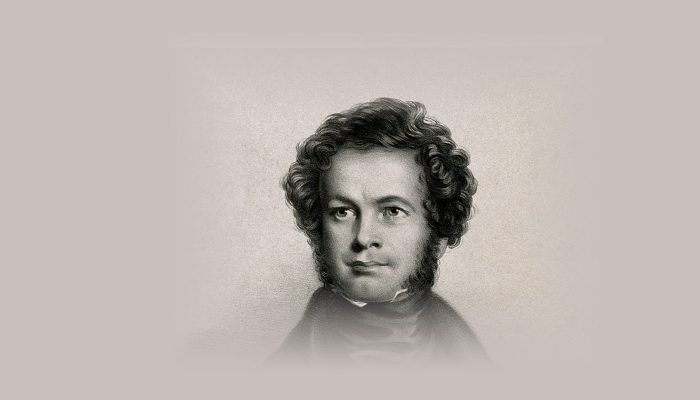
His name was Frederic Hervey Foster Quin. He was also the man who brought homeopathy to England, and he spent nearly fifty years persuading a doubtful medical establishment to take it seriously.
From Edinburgh to Naples
Quin was born on 12 February 1799. Recent research suggests he was born in Ireland. For a long time he was said to be the illegitimate son of Lady Elizabeth Foster, later Duchess of Devonshire. More recent work suggests she was in fact his godmother, which would explain the connection without the scandal.
He trained in medicine at the University of Edinburgh and graduated in 1820. A few years later he was practising in Naples, where he met a follower of Samuel Hahnemann, the German physician who had developed homeopathy. Quin was curious enough to travel to Leipzig in 1826 to see the system at work. He came back a convert.
Naples also brought him a royal patient. Prince Leopold of Saxe-Coburg, later the first King of the Belgians, made Quin his family physician. Quin stayed in the prince’s household in England until 1829.
Cholera, the first time
In 1831 cholera was spreading west across Europe. Quin was working in Paris. That September he consulted Hahnemann himself about the disease, then travelled to Tischnowitz in Moravia, where it had broken out.
He caught cholera there. He recovered, went back to work, and stayed until the epidemic had passed. It was an unusual thing for a fashionable society doctor to do, and it tells you something about the man behind the dinner-party wit.
Bringing homeopathy home
In July 1832 Quin settled in London, at King Street in St James’s. His friends included Dickens, Thackeray, the painter Edwin Landseer and the actor William Macready. His patients came from the same world.
Homeopathy arrived in England not through pamphlets or popular movements but through the consulting room of a well-connected physician, and the friendships that surrounded it. Knowledge travelled the way it often does: from one trusted person to the next.
On 10 April 1844 a group of doctors met at Quin’s house in Arlington Street, Piccadilly, and founded the British Homoeopathic Society. The date was chosen with care. It was Hahnemann’s birthday, the first since his death the year before.
Five years later, in 1849, Quin led the founding of the London Homoeopathic Hospital. It opened the following year at 32 Golden Square in Soho, with just 25 beds. The opening day was 10 April 1850: Hahnemann’s birthday again.
The summer of 1854
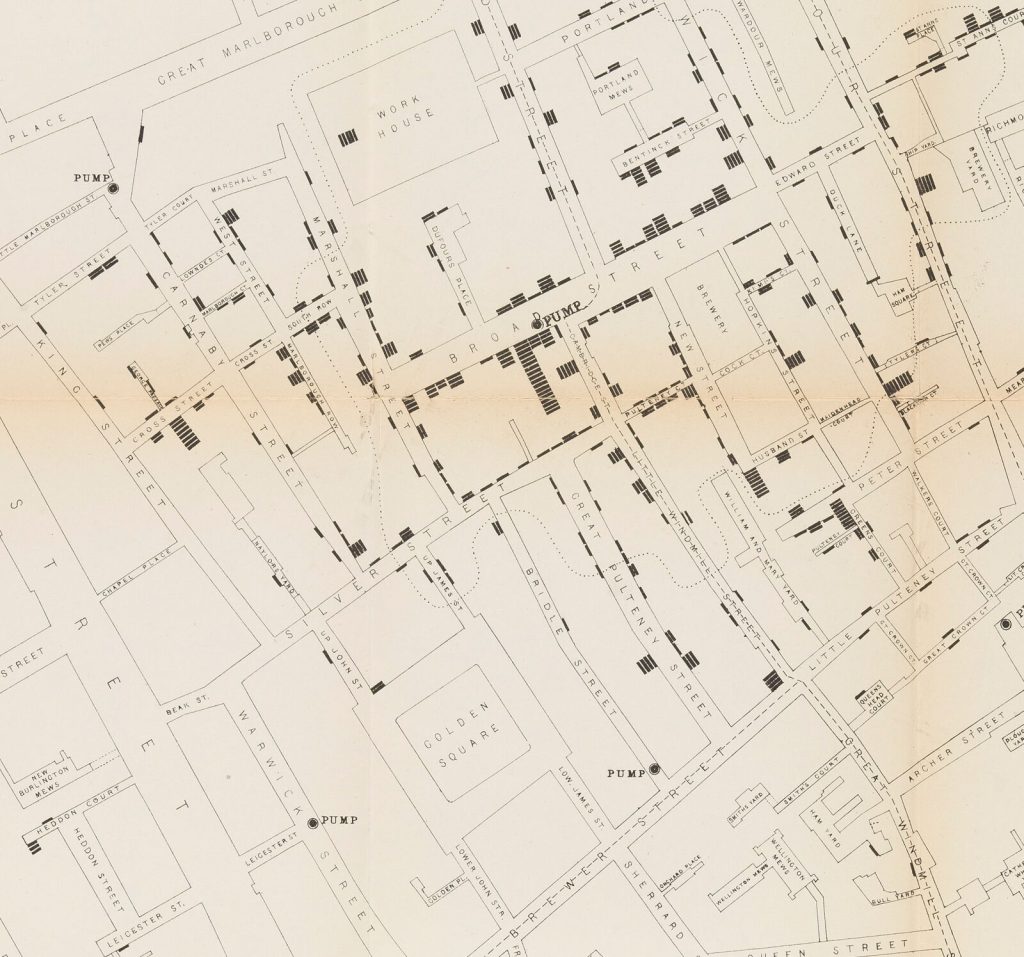
In late August 1854, cholera broke out around the water pump on Broad Street in Soho. It was one of the deadliest outbreaks London had seen, and it is the one John Snow famously traced to that pump. The London Homoeopathic Hospital, on Golden Square, was a few minutes’ walk from the pump.
After the epidemic, the General Board of Health asked London’s hospitals for their results. According to the hospital’s returns, it treated 87 people with cholera and 16 died, about 18 percent. Across the city’s other hospitals, the death rate for cholera was about 46 percent.
Those figures did not appear in the Medical Council’s report to Parliament. The homeopathic hospital’s returns had been left out. Lord Robert Grosvenor, who chaired the hospital’s board, raised the omission in the House of Commons in May 1855, and the missing figures were published as a parliamentary return.
It’s worth being clear about what the numbers can and can’t tell us. This was not a controlled trial. The forms did not record things like hygiene, nursing or fluids, and no one can now check how similar the patients were. What the episode does show is how the evidence was handled, and why so many homeopaths remember 1854. The researcher Michael Dean looked at the whole affair in the Journal of the Royal Society of Medicine in 2016.
What he left behind
Quin died on 24 November 1878.
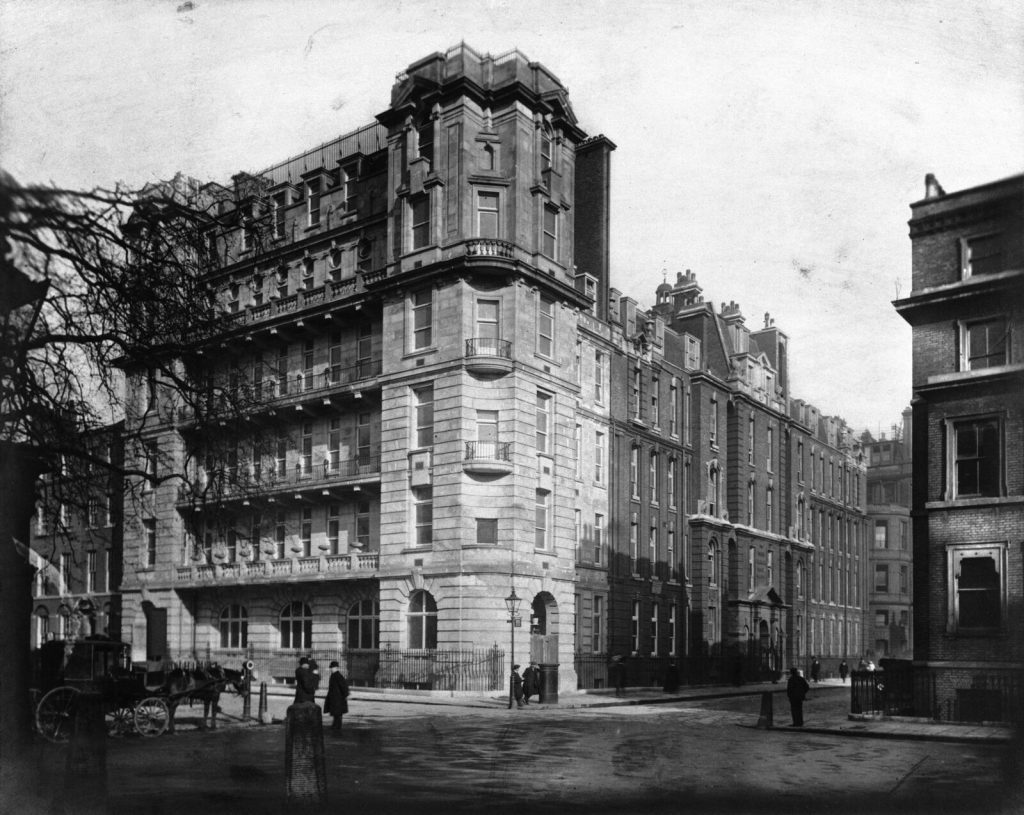
The hospital outgrew Golden Square and in 1859 moved to three houses on Great Ormond Street. In the 1890s they were replaced by the building that still stands there. Today it is the Royal London Hospital for Integrated Medicine, run by University College London Hospitals, although NHS funding for homeopathic remedies there ended in 2018.
The society that met in his drawing room also lasted. In 1944, on its hundredth anniversary, the British Homoeopathic Society became the Faculty of Homeopathy, which still exists today.
He was very much a man of his time: the aristocratic patients, the clubs, the establishment he spent his career both belonging to and arguing with. But what he started outlasted the world he moved in.
If you’re in London
You can walk Quin’s story in an afternoon. Start in Golden Square, where the hospital opened. A few minutes away on Broadwick Street, once Broad Street, a replica pump, without its handle, marks the spot where the 1854 outbreak began. Then head north-east to Great Ormond Street, where the hospital that grew from those 25 beds still stands, now in its third century.
Part of our series on the pioneers of homeopathy. Read the introduction: The Pioneers Who Shaped Homeopathy
Our reading room’s an opportunity to have personal time browsing our shelves full of wisdom.
The Helen Campbell Homeopathy Foundation SCIO is a registered educational charity focused on sharing homeopathy’s fascinating history and wonderful wisdom. We’re here to inform, not prescribe!
Written with AI assistance and checked by our team.