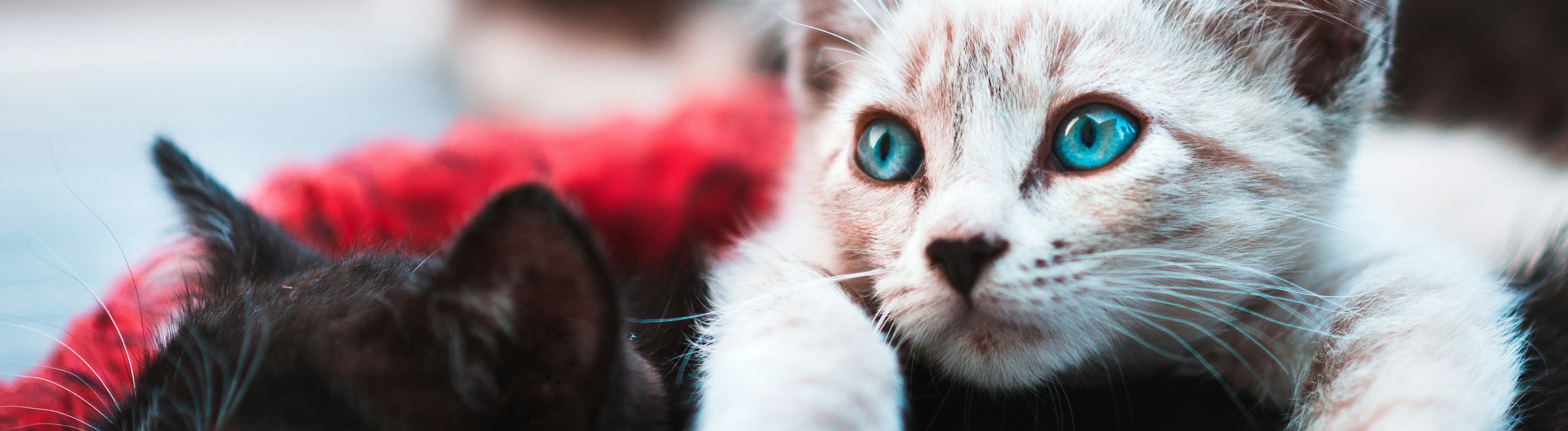
The doorbell rings. One cat strolls into the hall to see who it is, tail up, ready to inspect the visitor’s bag. The other has already gone. You’ll find her later under the spare bed, and she won’t come out until the front door has closed.
There are around 11.7 million owned cats in the UK, and more than one home in four has one, according to Cats Protection’s 2026 CATS report. In Scotland alone there are about 740,000. Ask any of their owners and you’ll hear the same thing: every cat is its own character. The one who sleeps through a thunderstorm. The one who follows you from room to room. The one who takes a week to forgive you for moving the furniture.
That attention to the individual cat is where homeopathy starts.
Two cats, two pictures
A homeopath looks less at the name of a problem and more at the pattern around it. Two cats can both be frightened of fireworks in quite different ways. One bolts at the first bang and stays wide-eyed and trembling long after it’s quiet. The other goes still and flat, hides, and seems to switch off. In homeopathic thinking those are two different pictures, and each points towards a different remedy.
The details that matter are the ones owners notice anyway. When does it happen? Is your cat better for company or for being left alone? Warm and curled by the radiator, or stretched out on a cool floor? What brings her round? A cat can’t tell anyone how she feels, so the person who knows her best becomes the most important witness.
A vet from the Highlands
Using homeopathy with animals is almost as old as homeopathy itself, as we explored in ‘Homeopathic Principles for Animal Care’ and in our article on horses. For cats, one of the best-known British names is George Macleod.
Macleod practised veterinary homeopathy for nearly fifty years, with practices in the Scottish Highlands, the West Midlands and Sussex. He was one of the few vets of his time to use homeopathic medicines wholly and exclusively, and he served as president of the British Association of Homoeopathic Veterinary Surgeons. He also wrote a series of books for owners, and his ‘Cats: Homoeopathic Remedies’ (Rider, 2005) was written, in the publisher’s words, “to satisfy the needs of the increasing numbers of cat lovers” who wanted to understand the approach.
Cats, homeopathy and the law
Cats bring a responsibility that people don’t. In the UK, the Veterinary Surgeons Act 1966 means that only a vet may diagnose and treat an animal. The Act lets owners and their household give minor treatment to their own animals, but a homeopath without a veterinary qualification can’t treat someone else’s cat.
The Royal College of Veterinary Surgeons set out its position in 2017. It considers that homeopathy lacks a recognised evidence base, and asks that complementary treatments are used alongside conventional care, not instead of it, and in discussion with the animal’s vet.
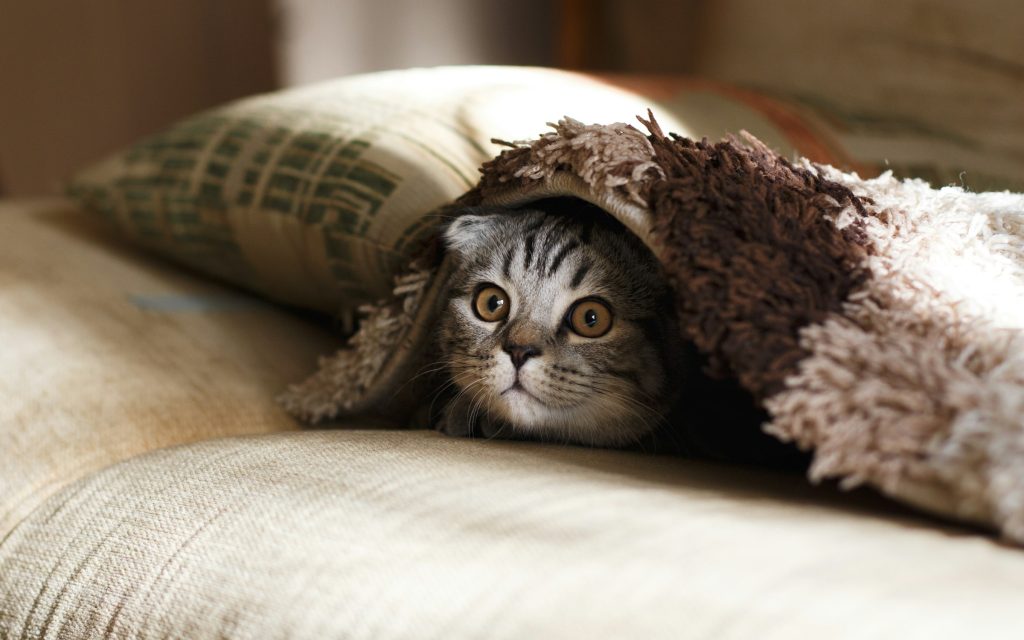
There’s a particular reason to keep the vet close with cats. They’re famously good at hiding when something is wrong. International Cat Care, the cat welfare charity, puts it plainly: “Becoming withdrawn and hiding is a typical feline response to pain.” A cat who has started hiding, eating less or changing her habits needs to be seen by a vet first.
Pictures cat owners will recognise
In homeopathy, each remedy has a ‘picture’: the pattern of behaviour, sensations and circumstances it’s traditionally associated with. These are some that come up around cats. They describe; they don’t promise.
Aconite. The sudden fright. A cat who has been badly scared, by fireworks, a dog in the garden or a door slamming in the wind, and is still restless and wide-eyed long afterwards. The picture is fear that arrives fast and won’t settle.
Gelsemium. Dread before the event. The cat who seems to know the carrier is coming out, goes quiet and heavy, trembles, and would rather be left alone. It isn’t stubbornness. She has gone inward.
Pulsatilla. The shadow. She follows you from room to room, cries when you leave the house, wants the lap the moment you sit down, and settles as soon as there’s company and comfort.
Phosphorus. The sociable one who greets every visitor, chats, and loves attention, but is unnerved by thunder and loud bangs and wants someone near when they come.
Natrum muriaticum. The opposite: reserved and dignified, she dislikes being fussed over and prefers her own company. After a loss or an upheaval she withdraws and keeps it to herself.
Staphysagria. Put out. The cat whose nose has been put out of joint by a new kitten, a new baby or a new partner, and who seems to sulk about it, keeping her distance and her dignity.
Arnica. The one many owners already know. A bump, a tumble from the top of the wardrobe, the bruised and sore feeling afterwards. We looked at Arnica’s long history in an earlier article.
What the research shows
Research on homeopathy for animals is limited. In 2015, Robert Mathie and Jürgen Clausen reviewed randomised, placebo-controlled trials of veterinary homeopathy across species. Only two were judged reliable enough to draw on, and their results were mixed, so the authors found no basis for general conclusions either way. Very few trials have looked at cats at all.
That leaves most of what’s known about homeopathy for cats in the case records and experience of the vets and owners who use it, the same territory as our article on anxious dogs.
A season of bangs and visitors
The weeks ahead can be hard on cats. Cats Protection found that 61% of cat owners in Scotland say their cat has been affected by fireworks, and Hogmanay brings another round. Christmas adds visitors, a tree where the armchair used to be, and new smells in every room. For some cats the vet is part of the strain too: in Scotland, Cats Protection found that the stress of a visit has become a bigger reason than cost for owners not taking their cat as often as they’d like.
None of that needs a remedy to start with. It needs an owner who’s watching. Our piece on festive food hazards for pets has more on keeping animals safe over Christmas.
Getting to know your cat
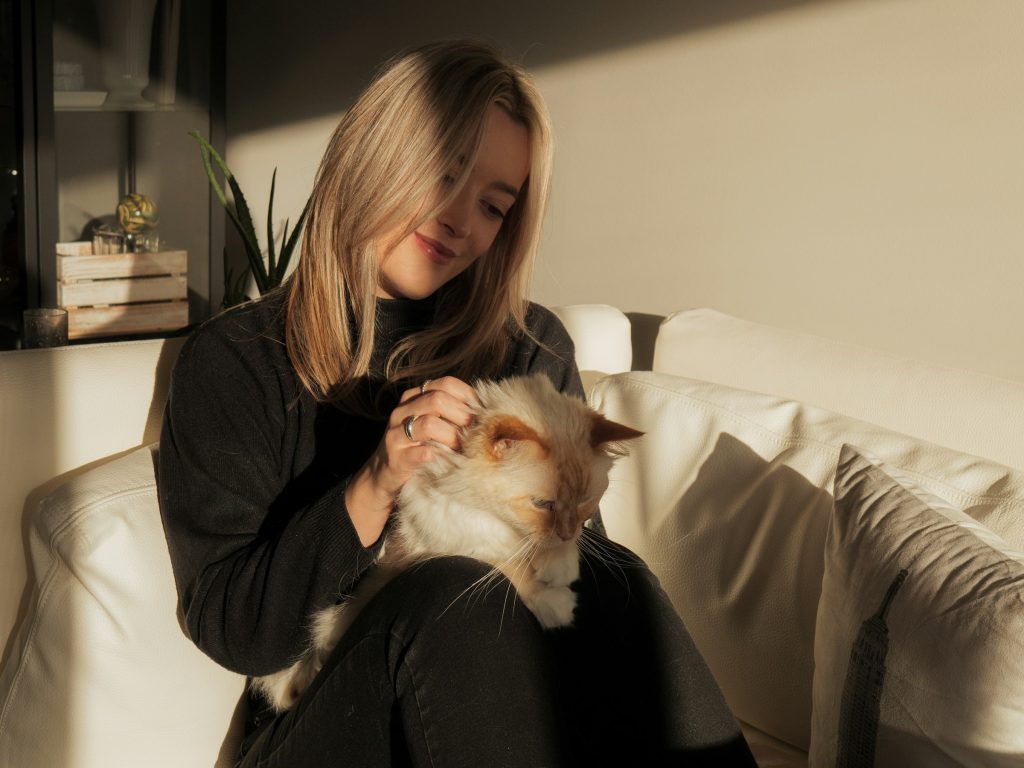
You don’t need to know any remedies to start seeing your cat the way a homeopath would.
- Keep a note. Write down what your cat does when she’s frightened, unsettled or out of sorts, and what makes it better or worse: noise, visitors, warmth, company, time of day.
- Watch the differences. If you have more than one cat, compare how each meets the same thing: the doorbell, the carrier, a stormy night. The differences are the point.
- Bring your vet in. Any change in hiding, eating or litter habits is a reason to see your vet first. If you’re interested in homeopathy, talk it over with them, or look for a vet who has trained in it through the BAHVS.
Image credits: Raul Varzar, Mikhail Vasilyev and Phil Desforges on Unsplash.
The Helen Campbell Homeopathy Foundation SCIO is a registered educational charity focused on sharing homeopathy’s fascinating history and wonderful wisdom. We’re here to inform, not prescribe!
Written with AI assistance and checked by our team.